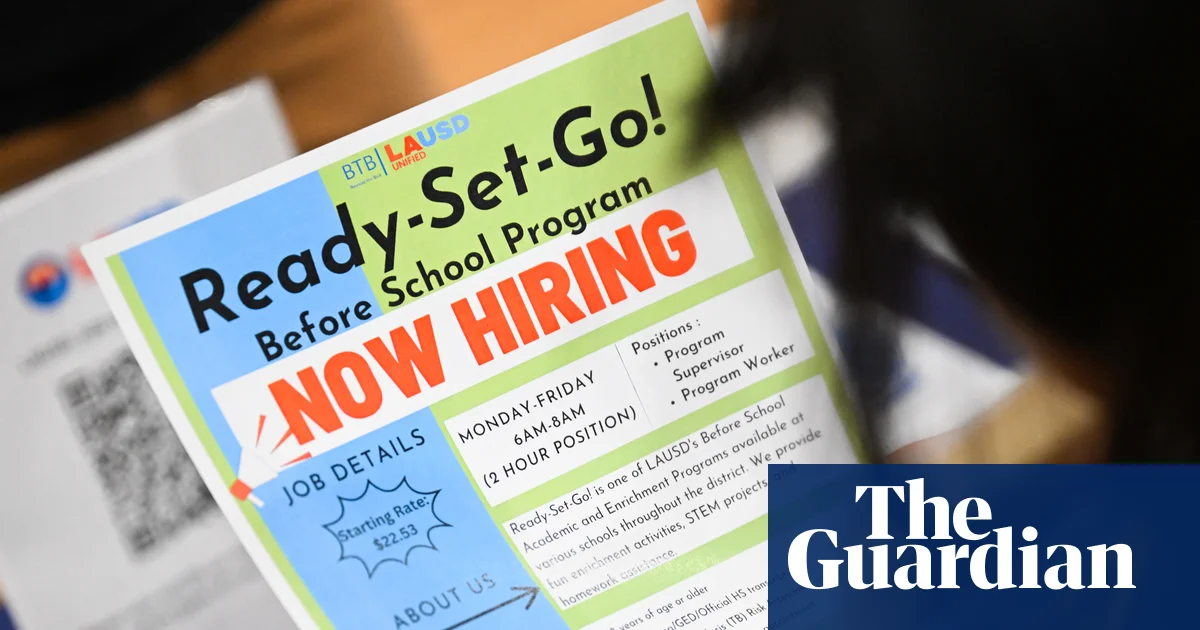
The US economy added 162,000 jobs in August, surpassing economists’ predictions of at least 50,000 new jobs, while the unemployment rate remained steady at 4.1%, according to data from the Bureau of Labor Statistics (BLS). The increase follows a fluctuating summer for the labor market, with revisions showing job growth in June at 31,000—up from an initial 20,000—and July at 21,000, revised up by 44,000 from a previously reported loss of 23,000. The payroll firm ADP reported private companies added 38,000 jobs in August, the lowest since January. Layoffs are down 41% from this time last year, according to Challenger, Gray & Christmas.
Economists describe a “slow hire, slow fire” dynamic, with little change in job openings and layoffs in July, and a flat number of workers quitting their jobs, suggesting reduced confidence in finding new employment. This lackluster job market is occurring alongside rising prices; US inflation increased from 2.4% in February to 3.4% in July, peaking at 4.2% in May, the highest rate since 2023. The increase in inflation has led to a sell-off in the US bond market, pushing up Treasury yields and potentially increasing the cost of loans.
Economists anticipate at least one interest rate hike from the Federal Reserve before the end of the year, a move intended to lower inflation but which carries the risk of destabilizing the labor market. Federal Reserve Chair Kevin Warsh stated the Fed remains committed to bringing inflation down to 2%, emphasizing the need for “confidence that underlying inflation is moving to our objective, clearly and at sufficient speed.” The question of whether the Fed will act on this commitment—and how aggressively—remains open, as the central bank assesses the balance between controlling inflation and maintaining a stable labor market.
Read the original coverage
💬 Comments
📜 Comment Policy