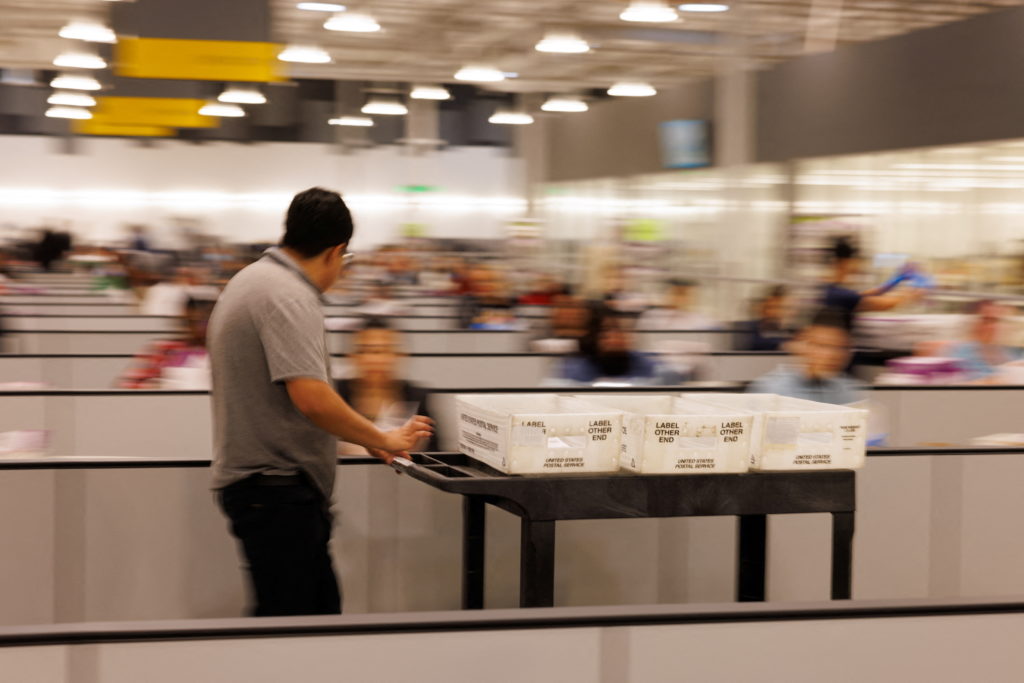
The Supreme Court ruled Monday that states may count mail-in ballots received after Election Day, provided they were cast by Election Day. The decision rejected a challenge to state laws allowing for this practice.
The case originated with a challenge from the Republican National Committee (RNC) arguing against extensions of time for receiving mailed ballots. According to NBC News, the court’s ruling allows election officials to continue counting these ballots as long as they were postmarked by Election Day. CBS News reported that the decision rejected a GOP challenge to a Mississippi law.
PBS Newshour noted the ruling rejects an attack led by Republicans on laws in more than half of states and the District of Columbia, which permit mailed ballots to arrive and be counted some number of days after the election. The Daily Caller also reported on the Supreme Court’s decision allowing mail-in ballots to be counted after Election Day.
The court's ruling addresses a recurring issue in elections where the timing of ballot receipt has been contested. CBS News stated that the case centered around whether mail-in ballots cast by Election Day but arriving later could still be counted.
No left-leaning sources offered additional details beyond reporting the decision and its immediate implications. No right-leaning sources reported on this story.
The Supreme Court’s decision maintains existing state laws regarding the receipt of mail-in ballots, affirming states' ability to set their own rules within the bounds established by federal law.
Read the original coverage
💬 Comments
📜 Comment Policy