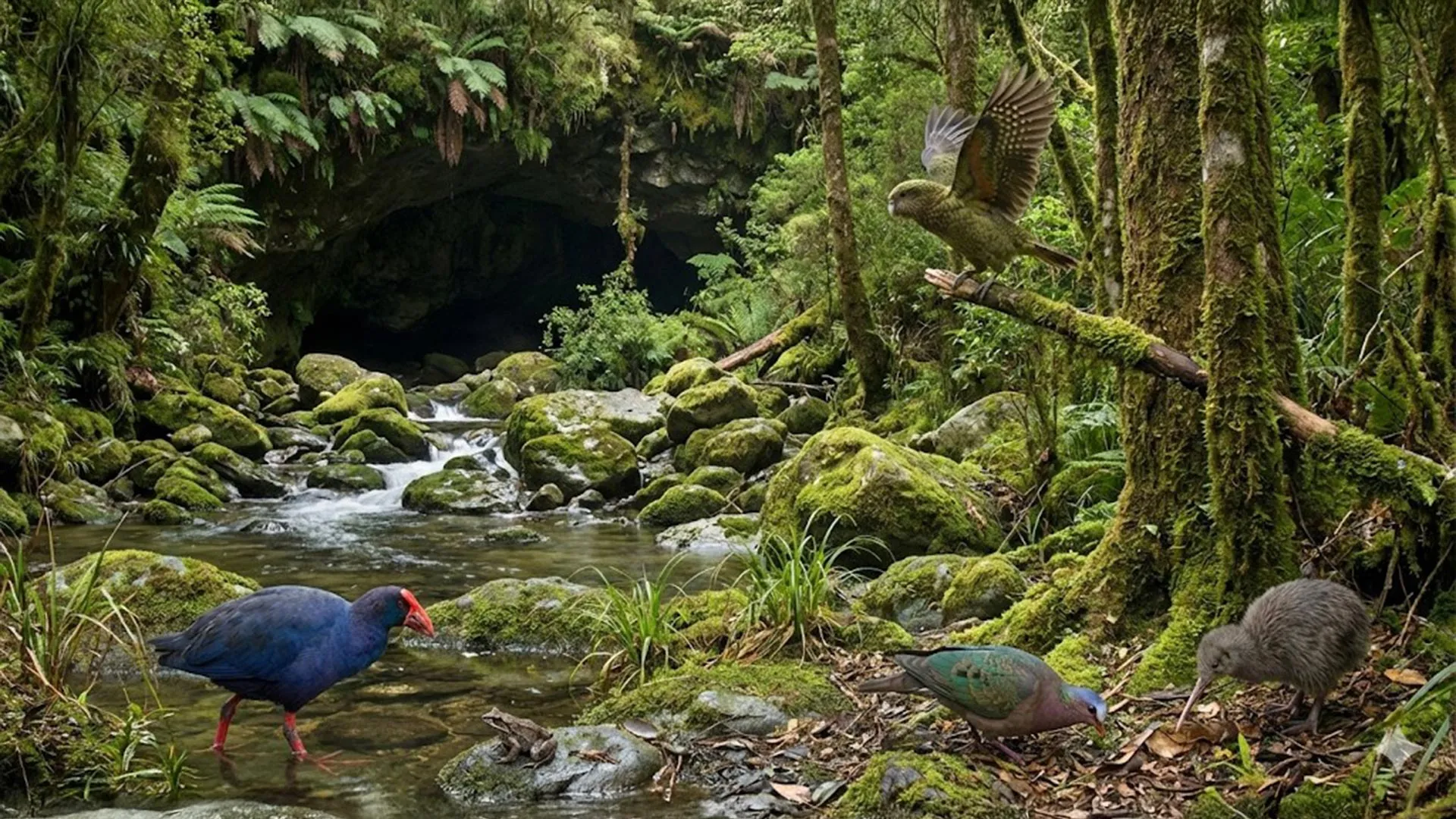
Researchers have uncovered a significant paleontological find in New Zealand, revealing fossils from an ancient ecosystem that thrived approximately one million years ago. The discovery was made within a cave system that scientists describe as a "time capsule" hidden beneath the landscape.
Among the recovered specimens is what experts believe to be a possible flying ancestor of the kākāpō, a flightless parrot native to New Zealand. This finding provides critical insights into the evolutionary history of the region's unique avian species and their ancestors.
The study highlights that the wildlife of New Zealand was undergoing substantial changes long before human settlement. Volcanic activity and significant climate upheaval were actively reshaping the country’s biological landscape and driving extinctions during this prehistoric era. These environmental forces played a pivotal role in determining which species survived and which disappeared from the record.
This research underscores the dynamic nature of New Zealand's natural history, demonstrating that major ecological shifts occurred naturally over vast periods. The fossils offer a rare glimpse into a lost ecosystem, allowing scientists to reconstruct the conditions that existed during the Pleistocene epoch.
The identification of the potential kākāpō ancestor is particularly notable, as it challenges previous assumptions about when these birds lost their ability to fly. It suggests that the lineage leading to the modern kākāpō had different ecological pressures and physical capabilities in the distant past.
By analyzing the geological context and the biological data from the cave, researchers can better understand the timeline of extinction events in New Zealand. The findings confirm that natural disasters and climatic changes were primary drivers of biodiversity loss in the region's deep history.
This discovery adds a new chapter to the understanding of New Zealand's paleontology. It provides tangible evidence of the complex interactions between geology, climate, and biology in one of the world's most isolated landmasses.
We don't rate truth. We strip the spin and show you which perspectives covered the story. You decide.
Read the original coverage
💬 Comments
📜 Comment Policy