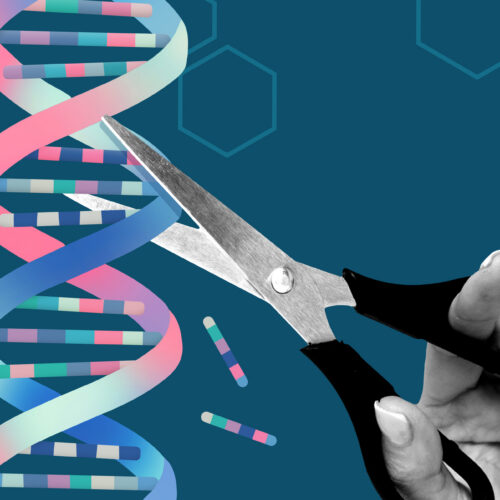
Researchers are leveraging Google’s AlphaFold artificial intelligence to redesign gene-editing proteins, aiming to reduce errors and improve their precision. The technology identifies specific protein regions responsible for mistakes during the editing process.
The team is using AlphaFold to pinpoint the parts of gene-editing proteins that cause them to bind to incorrect DNA sequences. This misbinding can lead to unintended edits in the genome, a significant safety concern with this emerging technology. According to ars_technica_science, AlphaFold’s ability to accurately predict protein structures allows researchers to understand *how* these errors occur at a molecular level.
The core of the approach involves analyzing the protein structure predicted by AlphaFold to identify areas that interact with DNA. By modifying these regions, scientists hope to create more precise gene-editing tools. The goal is not simply to edit genes, but to do so with greater accuracy and fewer off-target effects. This research addresses a critical need for safer and more reliable gene editing techniques as the field progresses toward clinical applications.
We don't rate truth. We strip the spin and show you which perspectives covered the story. You decide.
Read the original coverage
💬 Comments
📜 Comment Policy