Brent Searles and a team at the University of Kentucky have developed a new method to analyze the charred Herculaneum scrolls, 2,000-year-old papyri damaged in the eruption of Mount Vesuvius. The method focuses on identifying scrolls written in lead-based ink to prioritize analysis.
The scrolls, discovered in the 1700s in a palatial residence in Herculaneum believed to have belonged to a man named Piso, contain hundreds of priceless texts. Excavated from a single room thought to be the working library of an Epicurean philosopher named Philodemus, the opened fragments have revealed Greek philosophical texts, including *On Nature* by Epicurus and works by Philodemus himself, as well as some Latin works. However, the scrolls are so fragile that physical unrolling risks complete destruction.
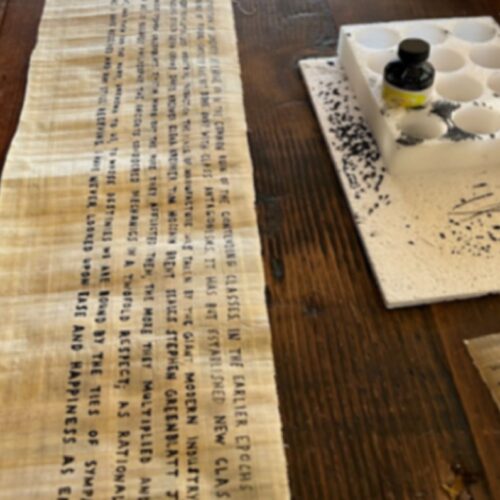
Searles’ lab created contemporary model papyrus scrolls, charring them to replicate the originals, to validate a screening method. This method determines which of the Herculaneum scrolls are written in lead-based ink, making them the most promising candidates for further analysis. Searles previously used a “virtual unrolling” technique in 2016 to reveal the first few verses from the book of Leviticus from the En Gedi scroll, a charred fragment found at the Dead Sea. The En Gedi scroll, like the Herculaneum scrolls, was too fragile to safely analyze before the virtual unrolling process.
Read the original coverage
💬 Comments
📜 Comment Policy