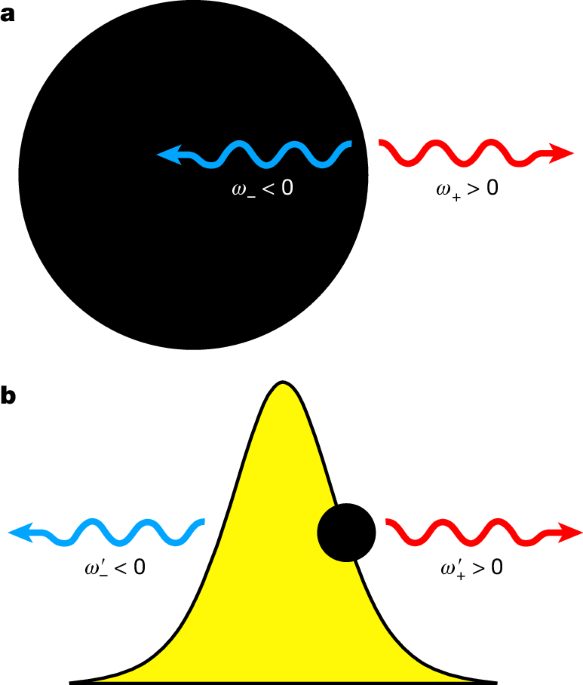
Researchers have presented theoretical and experimental evidence for the process behind Hawking radiation, using a fibre-optical analogue of black hole physics. The study demonstrates not only the generation of Hawking radiation but also its ‘backreaction’ – how it affects the source creating it.
The research, published in *Nature* on July 1, 2026, utilizes a specialized setup to mimic the conditions around a black hole's event horizon. This allows scientists to observe phenomena that are otherwise impossible to directly measure due to the extreme environments surrounding actual black holes.
The team’s work provides insight into the fundamental physics underpinning Hawking radiation – the theoretical emission of particles from black holes. Crucially, they were able to demonstrate and quantify the ‘backreaction’ effect, where the emitted radiation influences the optical pump used to create the analogue black hole. This confirms a key aspect of the theory.
The study's findings are detailed in an article with doi:10.1038/s41586-026-10720-3.
We don't rate truth. We strip the spin and show you which perspectives covered the story. You decide.
Read the original coverage
💬 Comments
📜 Comment Policy