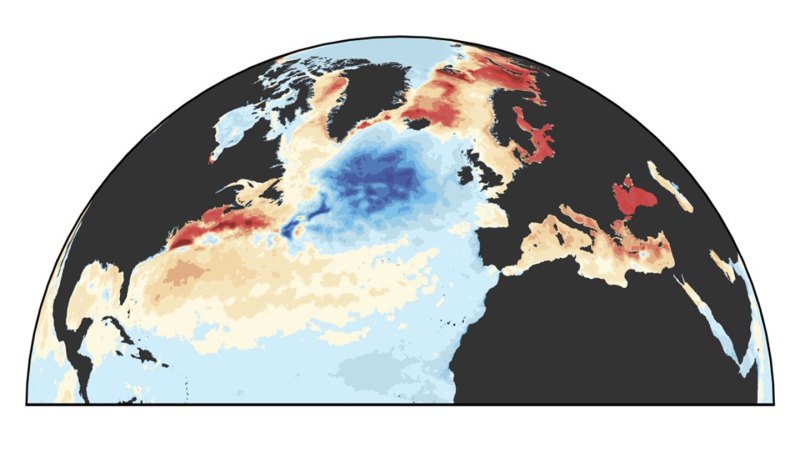
Researchers have identified a significant cold patch of water in the North Atlantic Ocean that serves as a critical indicator for the health of the Atlantic Meridional Overturning Circulation (AMOC). This large-scale system of ocean currents, which plays a vital role in regulating global climate patterns, appears to be weakening based on recent data analysis.
The presence of this 'cold blob' is not merely a local anomaly but a signal of broader systemic changes. Scientists report that the cooling trend in this specific region correlates with a decline in the strength and stability of the AMOC. This circulation pattern is responsible for transporting warm water from the tropics toward the North Atlantic, where it releases heat into the atmosphere before sinking and returning southward.
The weakening of this current has profound implications for regional and global weather systems. A slowdown in the AMOC can lead to altered precipitation patterns, increased sea levels along the eastern coast of North America, and shifts in marine ecosystems. The cold water observed in the North Atlantic suggests that less warm water is reaching the region than in previous decades, a key metric used by climatologists to assess the circulation's vitality.
While the exact causes of this decline are complex and multifaceted, involving factors such as melting ice sheets adding freshwater to the ocean and changes in wind patterns, the immediate observation remains clear. The cold blob provides tangible evidence that the AMOC is undergoing a significant transformation. Continued monitoring of this area is essential for understanding the pace and extent of these changes.
The findings underscore the urgency of studying ocean dynamics in the context of climate change. As the AMOC weakens, the feedback loops between the ocean and atmosphere may intensify, potentially leading to more extreme weather events. Researchers emphasize that while natural variability plays a role, the trend aligns with models predicting a slowdown due to anthropogenic global warming.
This development highlights the interconnectedness of Earth's climate systems. The health of the Atlantic Meridional Overturning Circulation is not just an academic concern but a practical one for communities dependent on stable weather patterns and sea levels. Further studies are required to determine if this weakening is part of a longer-term decline or a temporary fluctuation, but the current data points toward a major shift in ocean circulation.
We don't rate truth. We strip the spin and show you which perspectives covered the story. You decide.
Read the original coverage
💬 Comments
📜 Comment Policy