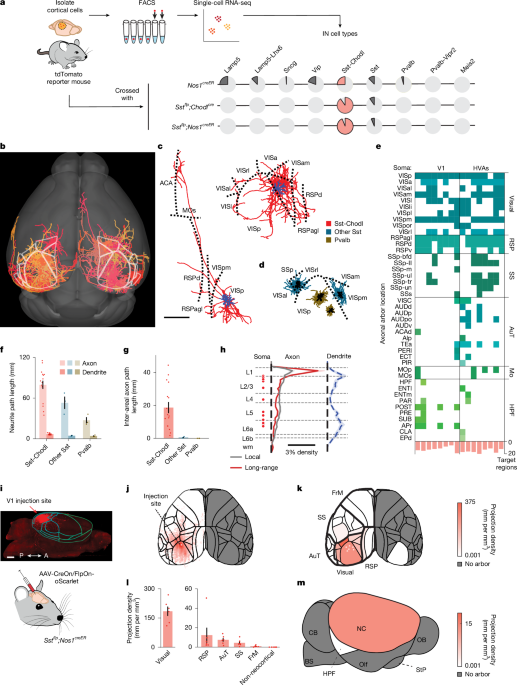
Researchers have identified a specific type of inhibitory neuron in mice that appears to play a crucial role in coordinating brain activity during sleep and low-arousal states. The study, conducted in mice, reveals that neurons co-expressing somatostatin (Sst) and chondrolectin (Chodl) become selectively active during periods of low arousal, such as slow-wave sleep, and are largely silent when the animal is awake and active.
These Sst-Chodl neurons, despite being sparse, exert a widespread influence across the neocortex via long-range axons targeting multiple brain regions simultaneously. Selective activation of these cells was found to be sufficient to promote the multi-region cortical synchronization characteristic of low-arousal states and to induce sleep. This suggests these neurons not only track behavioral state but also actively promote synchronized cortical activity and sleep behavior.
The research highlights the importance of cortical circuits in sleep regulation, complementing established subcortical mechanisms. Disruptions in sleep and rest are linked to a range of physiological and cognitive impairments, including insomnia, sleep apnea, narcolepsy, depression, attention deficit hyperactivity disorder, and schizophrenia. Transitions between alertness and low-arousal states occur rapidly and are accompanied by significant changes in neocortical activity patterns. While fast-spiking parvalbumin-expressing inhibitory neurons have been shown to promote desynchronized states during alertness, the function of inhibitory neuron populations regulating synchronized cortical states during low arousal periods was previously less understood.
Read the original coverage
💬 Comments
📜 Comment Policy