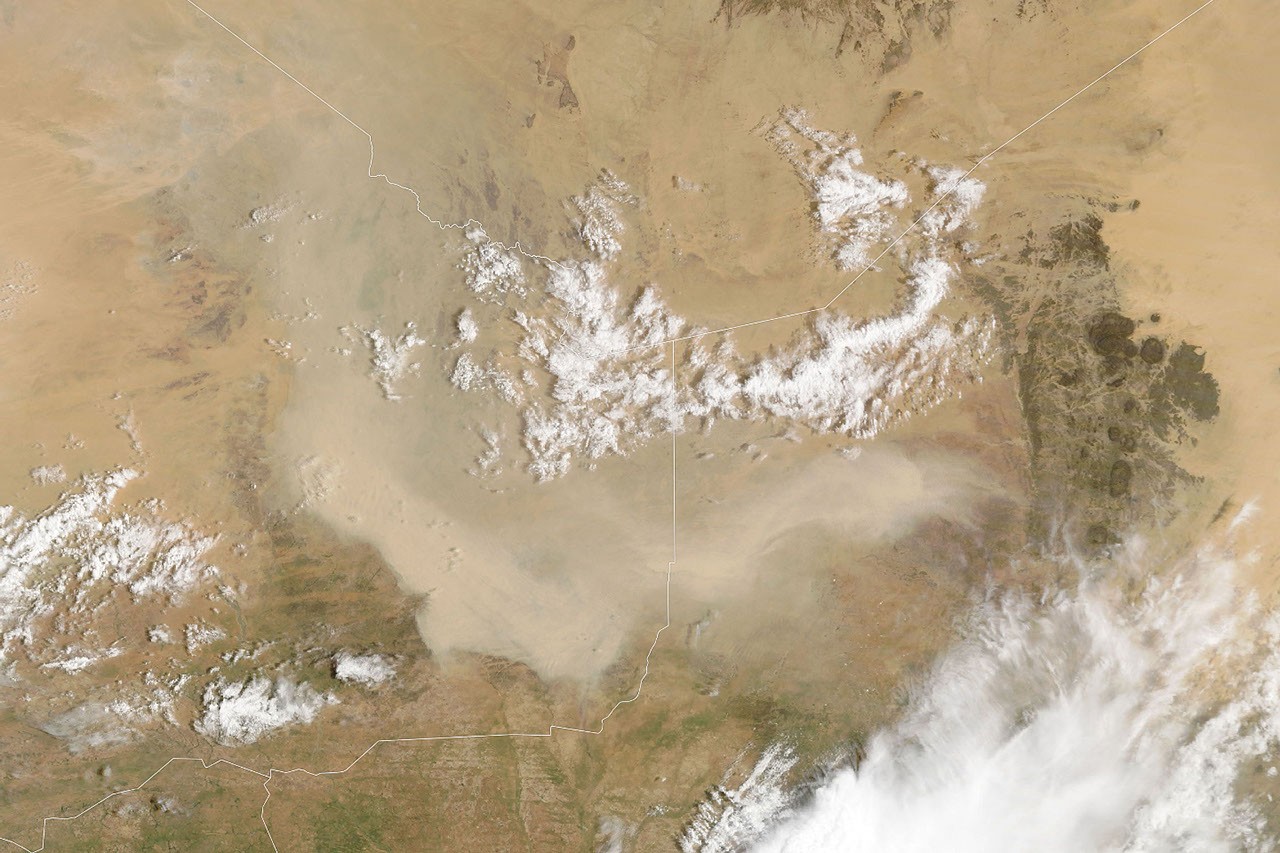
A dust storm covered parts of Mali and neighboring countries in early September 2026, captured by NASA’s Terra satellite. The storm is associated with haboobs, powerful dust storms driven by strong convective winds.
The Moderate Resolution Imaging Spectroradiometer (MODIS) on NASA’s Terra satellite imaged the plume on September 5, 2026. Atmospheric scientist at NASA's Goddard Space Flight Center, Tianle Yuan, explained that storms like this one are often associated with haboobs—powerful dust storms driven by strong convective winds. Following the initial image, satellite views showed aerosols from the region moving westward and spilling over the Atlantic Ocean, though a full transatlantic crossing is considered unlikely.
While transatlantic crossings are more common during late spring and summer due to the Saharan Air Layer—a dry, dusty air mass—the developing El Niño could reshape these patterns. Yuan noted that El Niño can affect dust activity over the Sahel and Mali by shifting the Intertropical Convergence Zone and altering convection patterns. This influence is complex; drier conditions can increase loose sediment, while reduced convective activity may decrease the intensity of storms. “The connection can be real,” Yuan said, “but hard to pin down for individual events.”
Read the original coverage
💬 Comments
📜 Comment Policy