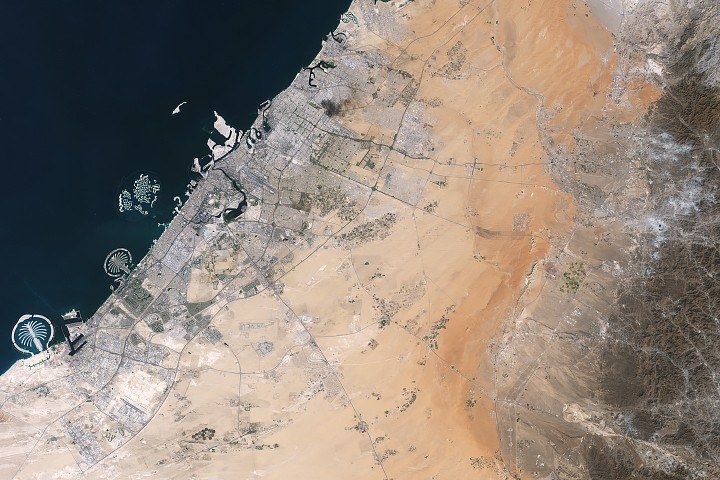
The landscape of the United Arab Emirates has undergone a profound transformation over millennia. According to geological records, Jabal al Fāyah currently rises prominently above the surrounding desert terrain. This elevated formation serves as a critical geographical marker, documenting a dramatic shift in regional topography and climate conditions.
Historical environmental data indicates that the area once rested beneath a shallow sea. The transition from an aquatic environment to an arid desert landscape illustrates significant geological activity and long-term climatic evolution. The current elevation of Jabal al Fāyah provides researchers with direct physical evidence of this ancient marine period.
Beyond its geological significance, the site holds substantial anthropological value. The region stands as a reminder of a watery past that supported early ecosystems. Furthermore, the environmental conditions of that era are directly linked to early human survival patterns in the area. The formation continues to offer valuable insights into how ancient populations adapted to shifting landscapes and resource availability across generations.
Ongoing study of Jabal al Fāyah allows scientists to trace the intersection of earth science and human history. By examining the physical remains of the shallow sea, experts can better understand the environmental foundations that facilitated early settlement and survival strategies in what is now a desert environment.
We don't rate truth. We strip the spin and show you which perspectives covered the story. You decide.
Read the original coverage
💬 Comments
📜 Comment Policy