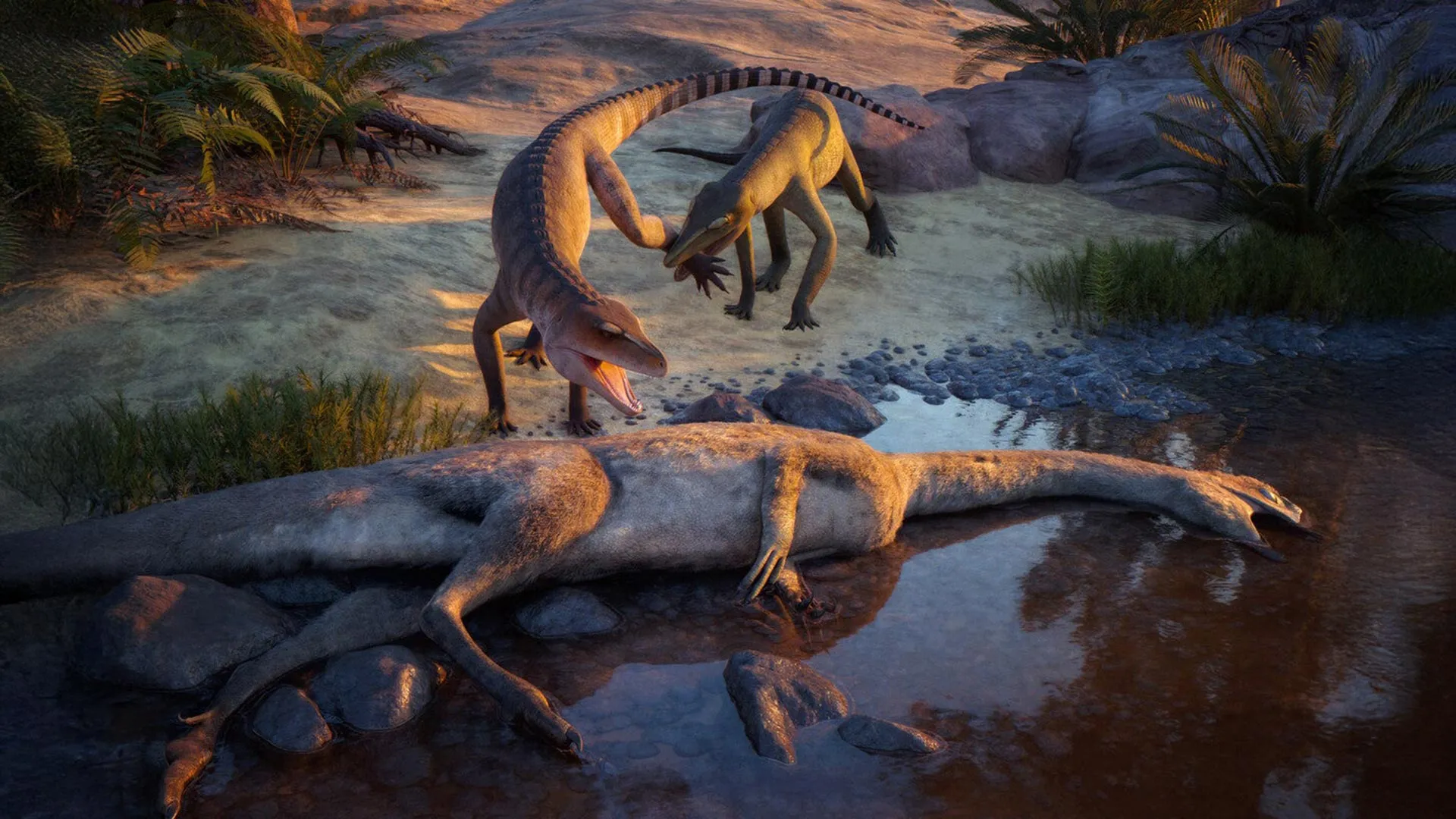
A fossil, previously overlooked for decades, has led to the discovery of a new crocodile relative that roamed what is now New Mexico approximately 210 million years ago. Named *Eosphorosuchus lacrimosa*, this jackal-sized predator possessed features suggesting it preyed on larger animals.
The newly identified species lived during the Triassic period, around 210 million years ago. The fossil itself was initially collected but remained unstudied for nearly 80 years before researchers re-examined it and determined it represented a previously unknown creature. *Eosphorosuchus lacrimosa* is described as being roughly jackal-sized.
The predator’s anatomy provides clues about its hunting style. Researchers note that the fossil exhibits a reinforced skull, powerful jaw muscles, and a short snout. These characteristics suggest *Eosphorosuchus lacrimosa* was well-equipped to tackle larger prey than itself. The discovery sheds light on the diversity of predators during the Triassic period and expands our understanding of early crocodile relatives.
We don't rate truth. We strip the spin and show you which perspectives covered the story. You decide.
Read the original coverage
💬 Comments
📜 Comment Policy