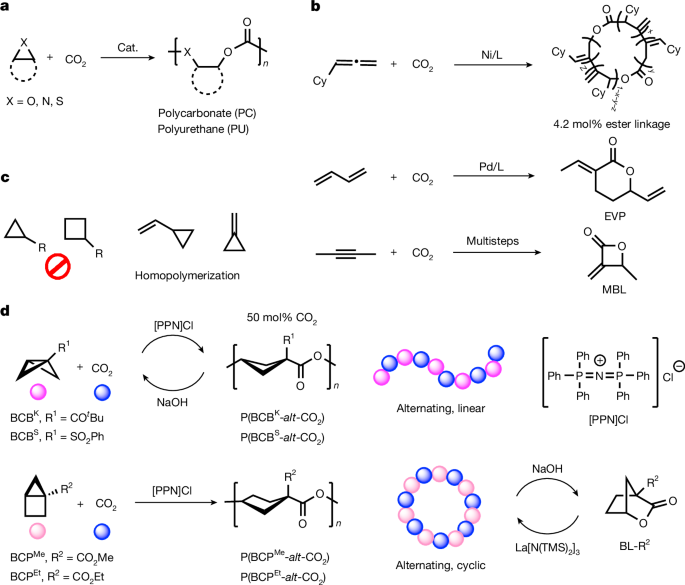
Researchers have developed a new method for creating high-performance polyesters from carbon dioxide (CO2) and bicycloalkanes, offering a pathway towards circular lifecycle plastics. The process utilizes a simple organic catalyst to directly copolymerize CO2 with bicycloalkanes.
The research, published online in *Nature* on July 29, 2026, details how this alternating copolymerization results in polyesters that can be selectively depolymerized and recycled. This capability is key to establishing a closed-loop lifecycle for the material, reducing plastic waste and promoting sustainability.
The study highlights the potential of using CO2, a greenhouse gas, as a building block for valuable materials. By combining it with bicycloalkanes – cyclic hydrocarbons – researchers have created polyesters that exhibit high performance characteristics while also being designed for efficient recycling. The use of a simple organic catalyst is notable, suggesting scalability and cost-effectiveness for potential industrial applications.
The *Nature* article (doi:10.1038/s41586-026-10848-2) provides further details on the chemical processes involved and the properties of the resulting polyesters, emphasizing their potential to address plastic waste challenges through a circular economy approach.
We don't rate truth. We strip the spin and show you which perspectives covered the story. You decide.
Read the original coverage
💬 Comments
📜 Comment Policy