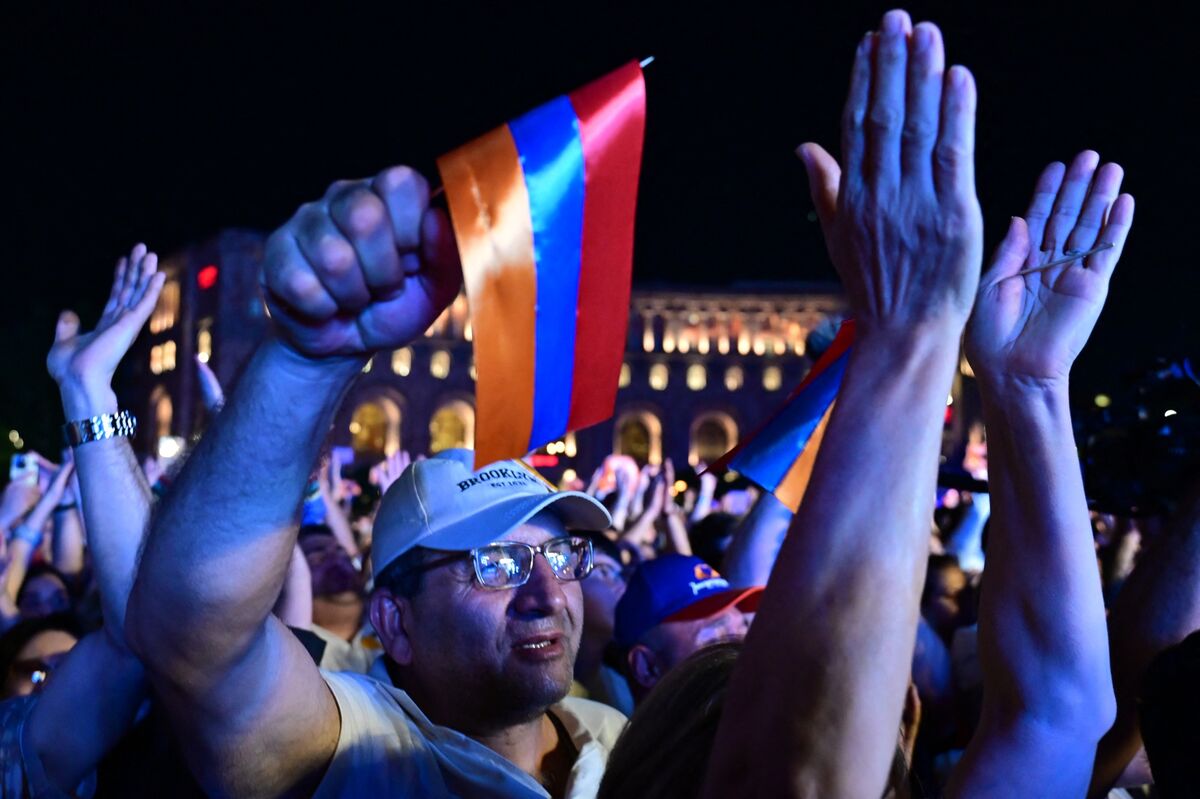
Armenia holds parliamentary elections on Sunday, with incumbent Prime Minister Nikol Pashinyan seeking a third term. The election presents voters with a choice regarding the country's geopolitical orientation, as Pashinyan seeks closer relations with the European Union and the United States.
According to the Christian Science Monitor, voters face a choice between a prime minister seeking peace with rival Azerbaijan and pro-Russia elites. The center-leaning outlet characterized the election as a decision on whether Armenia will stay in Russia's orbit or engage with the West.
Newsmax reported that the parliamentary elections will serve as a vote on Armenia's geopolitical future. The outlet stated that Pashinyan is seeking closer relations with the European Union and the United States.
BBC World reported that Pashinyan is seeking a third term despite falling domestic support. The outlet described Russia as applying pressure on Armenia's pro-West government ahead of the vote.
Pashinyan's platform includes pursuing peace with Azerbaijan, according to the Christian Science Monitor. Armenia and Azerbaijan have had longstanding tensions, and the prime minister's approach to this relationship represents one dimension of the electoral choice facing voters.
The election takes place in the context of Armenia's historical relationship with Russia. The country has traditionally maintained close ties with Moscow, but Pashinyan's government has pursued policies oriented toward Western institutions. This shift has created friction with Russia, according to BBC World's characterization of Moscow applying pressure on the government.
The outcome of Sunday's vote could determine whether Armenia continues its Western-oriented foreign policy trajectory or returns to a more Russia-aligned stance. The competing visions offered by Pashinyan and the opposition reflect broader questions about Armenia's international alliances and regional positioning in the South Caucasus.
Voters will decide between the incumbent prime minister's approach to foreign relations and the alternative presented by opposition figures whom the Christian Science Monitor described as pro-Russia elites. The result will shape Armenia's relationships with both Moscow and Western capitals in the coming years.
Read the original coverage
💬 Comments
📜 Comment Policy