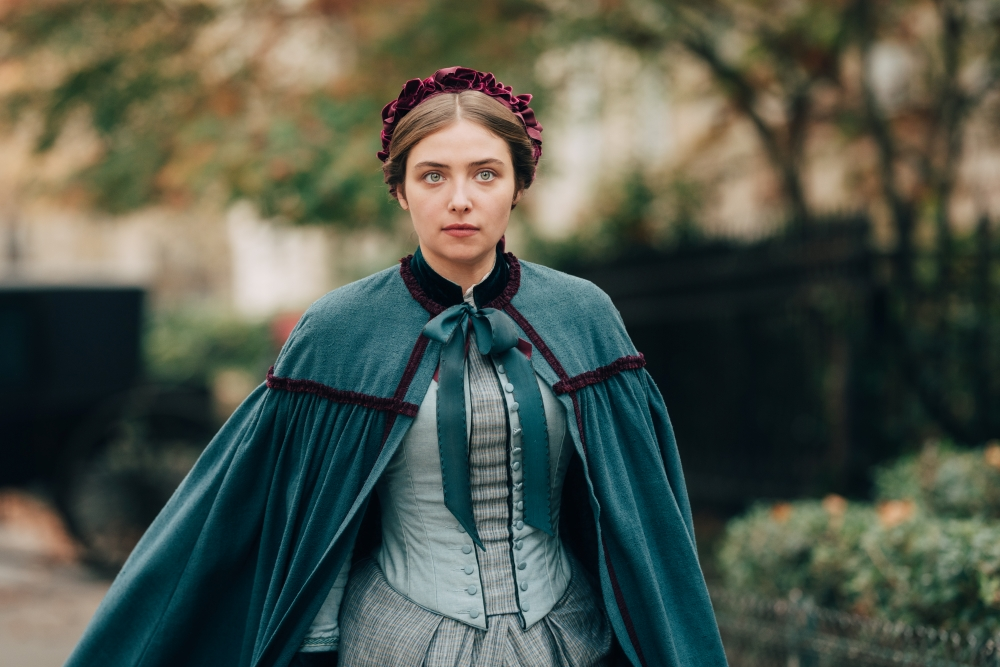
The upcoming six-part series “Swapped” (also known as “Sorority”) draws inspiration from a family history and the little-known customs surrounding wet nurses in 19th-century France. The series, highlighted by France TV Distribution, will be presented at the Unifrance Rendez-vous and La Rochelle Fiction Festival.
The story centers on Rose, played by Lula Cotton-Frapier, who leaves her rural home to become a wet nurse for a wealthy Parisian family. She encounters midwife Odette (Barbara Probst), who warns Rose she will not be allowed to keep her own child. Rose then considers a risky solution: exchanging her baby with that of Hélène de Gersande (Alexia Giordano), a grieving mother who recently lost her infant. The series explores how these three women from different backgrounds navigate a male-dominated society and strive for freedom.
Writer Vincent Robert’s great-grandmother was a wet nurse, and his grandfather was a ‘Petit Paris’, a child abandoned in Paris and sent to families in the Morvan region. Co-writer Alexandra Echkenazi initially proposed turning the story of these wet nurses into a TV series. “It was Alexandra’s idea to turn the story of these wet nurses from Morvan into a TV series, something which had never occurred to me,” Robert recalls.
Echkenazi discovered the prevalence of wet nurses originating from the same region. “I knew nothing of these customs before discussing them with Vincent,” she stated. “Sure, I had learned about wet nursing and the fact that these women were coming from outside Paris, but I had no idea they were all coming from the same region.” She recognized the narrative potential and the opportunity to highlight social class disparities and the exploitation of women’s bodies during that era. “Beyond the historical aspect of this story, it also puts to the spotlight the difference between social status and class, but also how much the female body was exploited and controlled during these times, whatever social status you had.”
Producer Christine de Bourbon Busset brought on Belgian directors Vania Leturcq and Savina Dellicour (“Pandora”) to helm the project after a previous collaboration fell through. “I fell in love with ‘Pandora,’ and we were discussing another project at the same time, which unfortunately didn’t get greenlit, but that allowed me to pitch them this idea.” Leturcq and Dellicour were enthusiastic about the challenge of creating a premium period drama.
Read the original coverage
💬 Comments
📜 Comment Policy