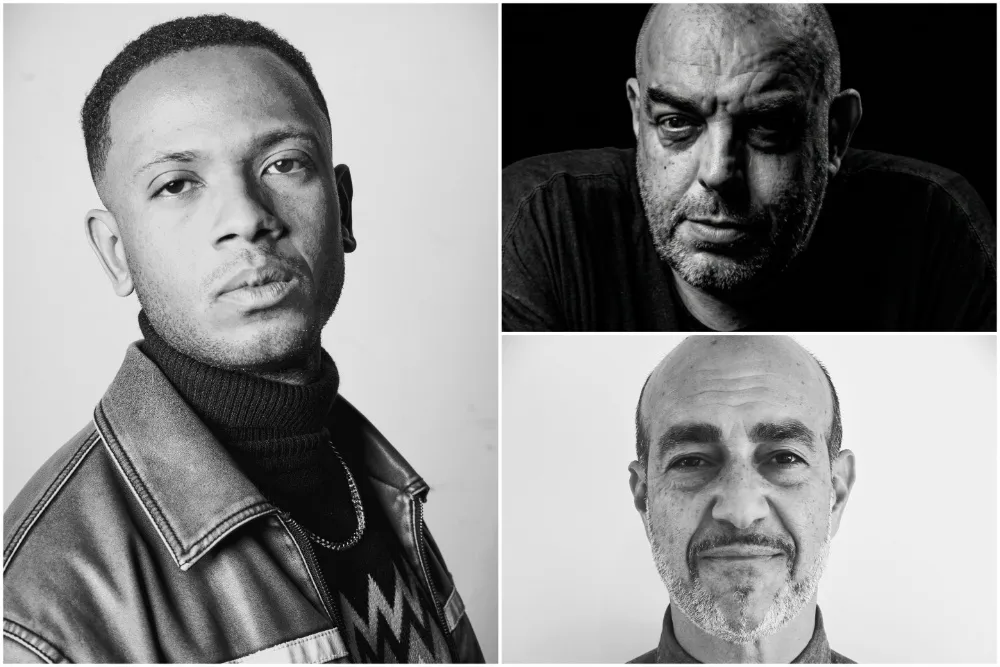
British writer-director Lakeem Rose is developing a contemporary adaptation of Shakespeare’s “Much Ado About Nothing,” set after a modern war. The film will feature the original Early Modern English dialogue alongside contemporary English subtitles, and incorporate sequences styled after silent cinema.
The adaptation centers on four returning soldiers reuniting at the home of a family friend, where old grudges and new romantic interests emerge, alongside a potentially destructive scheme. Rose explained, “The language has survived for 400 years for a reason. Our experiment is to change the context around it and see what happens when these characters, relationships and ideas are placed in a world that feels immediate to people now.” He also noted his study of filmmakers like Kenneth Branagh and David Harewood in bringing Shakespearean language to life.
The project is being produced by Plato Fountidakis and Paul Rapovski of Fast Motion Films, with international sales and distribution handled by Clever Creature. Fountidakis stated that independent cinema “depends on backing new voices with bold tastes,” and that this adaptation “has the opportunity to introduce Shakespeare to audiences who might never otherwise engage with his work.” Fountidakis and Rapovski’s previous work includes “Enhanced,” “Believer,” “Mutant X,” “Bullet Proof Monk,” “The Chronicles of Riddick,” “Scott Pilgrim vs. the World” and “Lost Girl.” Their experience with action design and production is expected to influence the film’s military setting.
Hong Kong-based producer and casting director Mike Leeder of Red Packet Media is also producing. Leeder, who has worked on films such as “Rogue One: A Star Wars Story,” “Fearless,” and the “Ip Man” franchise, expressed interest in “the collision of traditions,” noting that the Shakespearean language will be set against a backdrop of contemporary genre cinema. He added that setting the story in the aftermath of conflict will give the romance, humor, and deception “a new tone,” while the silent visual passages will allow for storytelling through imagery.
Read the original coverage
💬 Comments
📜 Comment Policy