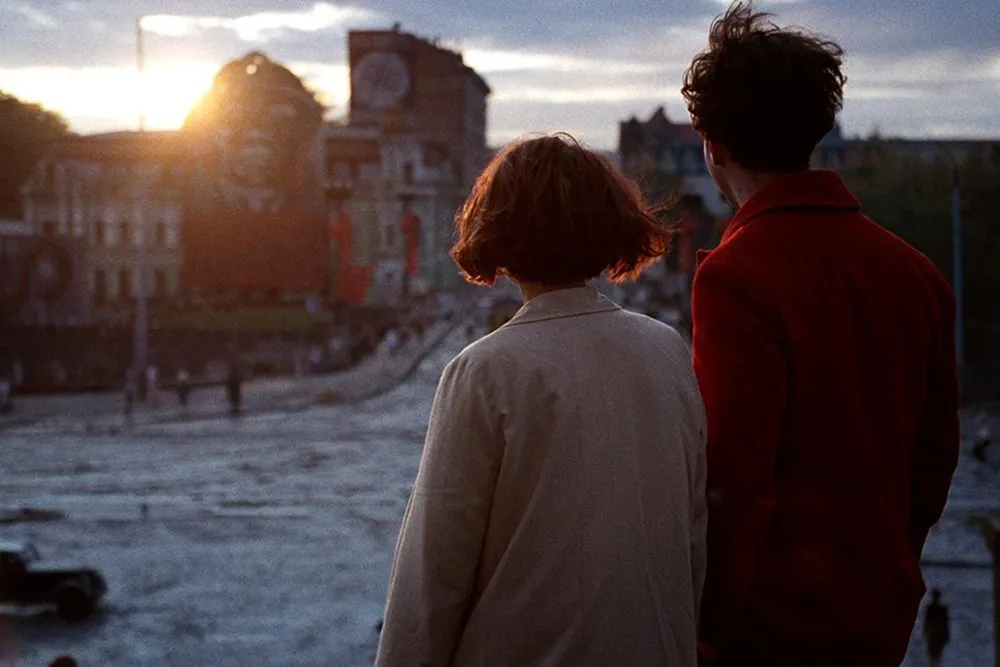
The Venice Film Festival sparked controversy by selecting Ilya Khrzhanovsky’s “DAU” for its main competition, drawing criticism from Ukrainian officials who claim the film is linked to the Russian state. This comes amid a broader debate about the inclusion of Russian artists in international cultural events following the invasion of Ukraine.
On August 17, the Ukraine Ministries of Foreign Affairs and Culture, along with the Ukrainian Embassy in Italy, issued a joint statement criticizing the festival’s decision, asserting that it would “restore respectability” to what they termed “Putin’s pariah state.”
Venice artistic director Alberto Barbera responded with an Instagram post, stating that “‘DAU’ is not a Russian film; it is not pro-Putin propaganda.” Khrzhanovsky himself refuted allegations of Russian financing or state backing in a Facebook post and in an interview with Variety, stating, “Since the war started, there was no question of what side I am on, because I am on the side of Ukraine.”
The controversy follows a similar debate surrounding the Venice Art Biennale’s inclusion of Russian and Israeli artists. The situation highlights a shift in approach to Russian cultural exports, following initial calls for a boycott after the full-scale invasion of Ukraine. In the past year, Russian-born directors Nastia Korkia (“Short Summer”) and Andrey Zvyagintsev (“Minotaur”) have received awards at Venice and Cannes, respectively. Victor Kossakovsky, whose documentary “Holly Wood Dust” premiered out of competition, also joined Khrzhanovsky at the festival.
Both Kossakovsky and Khrzhanovsky left Russia in the 2000s, but a larger exodus of Russian filmmakers began after the February 2022 invasion. Many have established exile communities in cities like Tbilisi, Paris, Berlin, and Los Angeles. Two-time Oscar nominee Alexander Rodnyansky, in Venice with Kornél Mundruczó’s “Place to Be” starring Ellen Burstyn and Taika Waititi, described the current situation as “two Russias”: “Russia as the country with this regime controlling everything and censoring all the attempts to speak freely about what’s going on. And there is a Russia outside of the geographical borders.”
Read the original coverage
💬 Comments
📜 Comment Policy