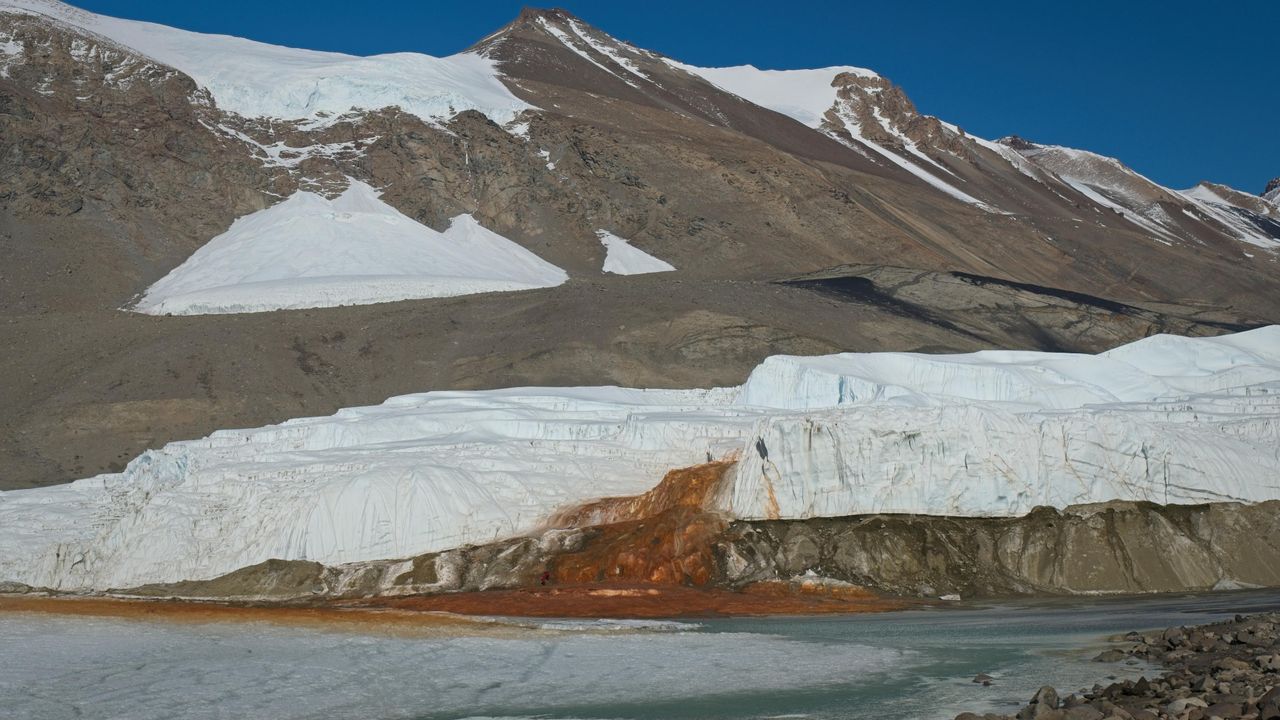
Scientists have uncovered a potential clue regarding the origin of Blood Falls, a peculiar phenomenon in East Antarctica. A new study suggests the briny water responsible for the crimson flow may have been trapped when sea levels were higher than present.
The gruesome-looking Blood Falls is located in East Antarctica’s Taylor Glacier. The falls aren't actually blood, but extremely salty, iron-rich water that periodically emerges from a subglacial lake. Researchers have long sought to understand how this highly saline brine accumulated beneath the ice.
The new study proposes that the brine “may have been emplaced when sea levels were higher than they are now,” according to Live Science’s reporting of the research. This suggests that saltwater penetrated the glacier system during a period of elevated sea levels and became trapped as conditions changed.
The researchers did not elaborate on the specific mechanisms or timeframe for this process in the provided source, but the finding offers a significant step toward unraveling the mystery surrounding Blood Falls. The study provides insight into the geological history of Antarctica and the processes that shape its unique environment.
We don't rate truth. We strip the spin and show you which perspectives covered the story. You decide.
Read the original coverage
💬 Comments
📜 Comment Policy