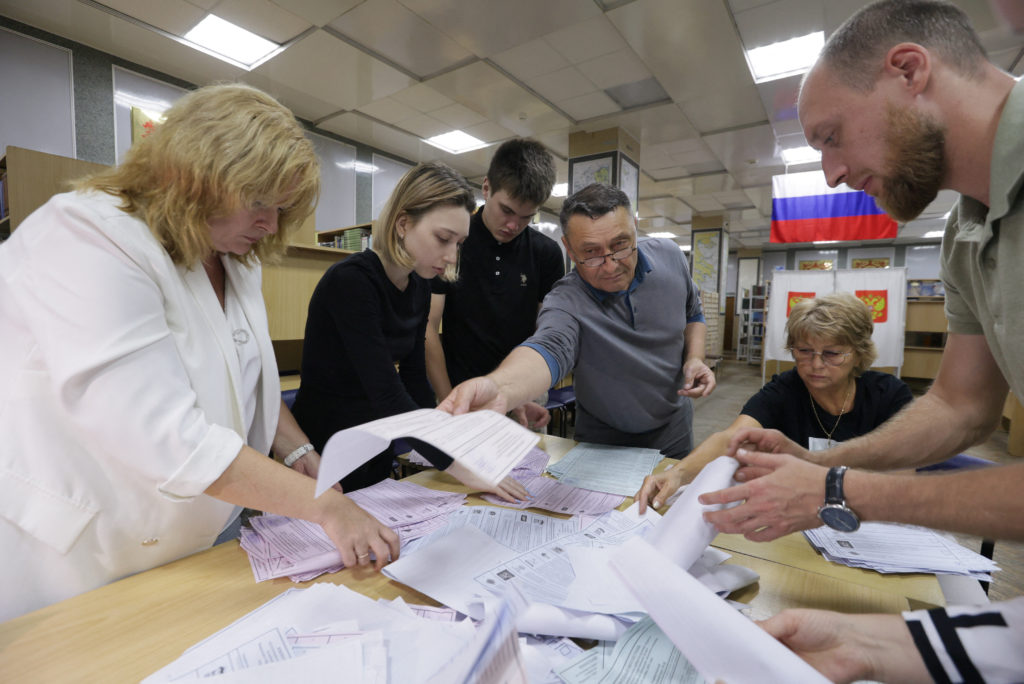
Russia concluded its first parliamentary election since the full-scale invasion of Ukraine, a vote virtually certain to reaffirm Kremlin dominance. For the first time, the election included residents of four Ukrainian regions Moscow illegally annexed but does not fully control, as well as those in Crimea, annexed in 2014. Authorities in Kyiv denounced the vote in the occupied territories as illegal, and the European Union called it a violation of international law. The Kremlin seeks to use the election to demonstrate public support for the war amid mounting economic costs and increasing Ukrainian attacks.
The election, which began Friday and encouraged online voting among its 111 million eligible voters, featured a predictable lack of opposition. The Yabloko party, the only registered entity to publicly criticize the war, was removed from the ballot last month, and anti-war politicians faced imprisonment or exile. Both Yabloko and the Communist Party reported observers being turned away from polling stations. The main Kremlin party, United Russia, is widely expected to retain control of the State Duma, with several smaller “systemic opposition” parties also expected to maintain their presence.
As voting concluded Sunday, Ukrainian forces reportedly fired over 1,000 drones at Russia, including hundreds toward Moscow. Preliminary results are expected within hours in western Russia, though the outcome is all but assured. The vote is intended to legitimize Russia’s actions in Ukraine and showcase support for the war effort.
Our reading is that Russia is attempting to project an image of domestic stability and support for its war in Ukraine through this election, despite clear evidence to the contrary. The inclusion of illegally annexed territories is a transparent effort at legitimization, while the suppression of opposition and the timing of the election alongside Ukrainian drone attacks suggest a deliberate strategy to manufacture consent and deflect from the war’s costs. The scale of the Ukrainian drone response, as reported, appears intended to demonstrate Russia’s vulnerability and disrupt this manufactured narrative.
Read the original coverage
💬 Comments
📜 Comment Policy