France Braces for Nationwide Strikes and Protests Over Cost of Living and Public Services
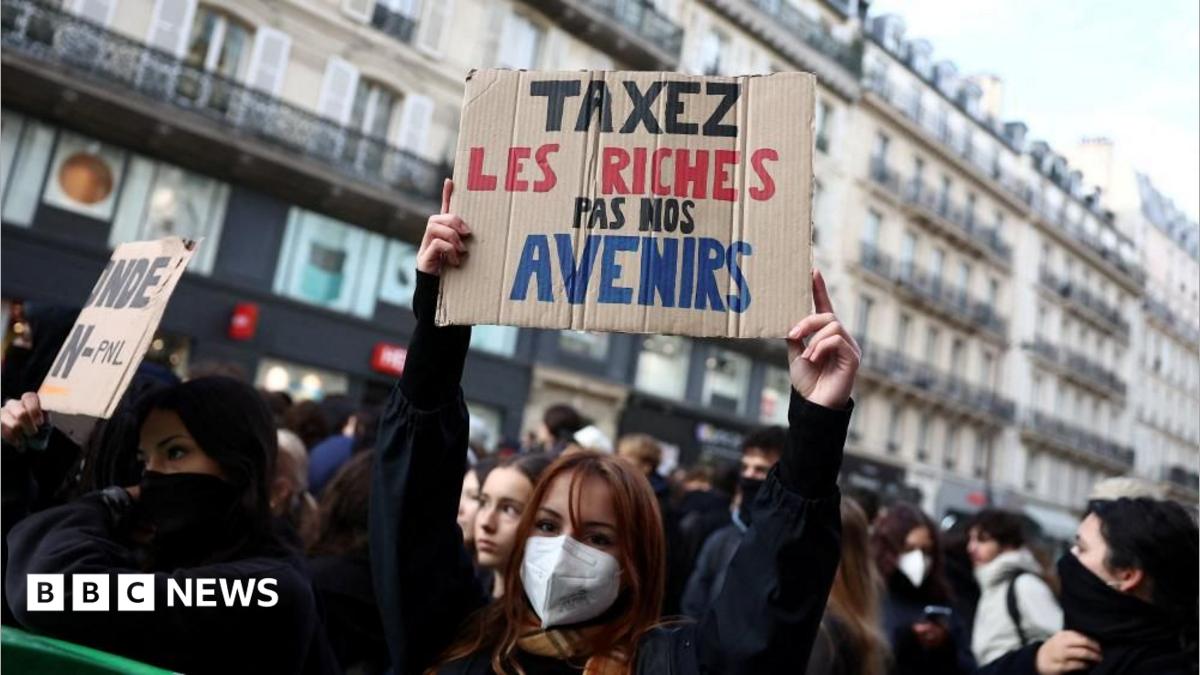
France is preparing for widespread strikes and protests on November 5, with hundreds of thousands expected to participate in demonstrations across the country. The mobilization, led by five major unions, began with student protests over conditions in education but has broadened to include demands for higher wages, improved public services, and a rise in the minimum wage, currently €12.31 an hour. Authorities anticipate between 500,000 and 700,000 demonstrators, with tens of thousands expected in Paris, and have deployed 70,000 police and gendarmes to maintain order. The protests follow weeks of unrest triggered by rising living costs and, more recently, clashes between protesters and police.
Workers in public and private sectors, including education, rail, hospitals, and oil refineries, are participating in the strikes, with some schools and public transport already experiencing disruption. The CFDT union is seeking a net increase of €100 a month for workers, while the government has attempted to address public anger by releasing diesel reserves and promising reforms to the university admissions platform. A coalition of unions is urging workers, pensioners, and young people to join the day of action, framing it as a “great day of convergence.”
The revived “yellow vest” movement has also called for further blockades and protests on Friday and Saturday, adding to the potential for sustained disruption. While the government has taken steps to mitigate rising fuel costs, unions argue that more comprehensive measures are needed to address the broader cost of living crisis. Following recent marches marred by violence and looting, with over 2,000 stores reportedly targeted on October 17, Interior Minister Laurent Núñez has vowed a “firm response” to any outbreaks of unrest. France is expected to import more electricity than it produces on Thursday due to disruption at nuclear plants, and approximately 17.5% of primary schools are affected by the strikes.
Where they differ
- The BBC and DW emphasized the scale of police deployment (70,000 officers), while the New York Times and RFI focused more on the number of expected demonstrations (over 220).
- RFI highlighted that more than 220 protests were expected, a detail not prominently featured in the BBC or DW reports.
- The New York Times framed the strikes as an escalation of weeks of protests, while the BBC focused on the convergence of multiple groups, students, ‘yellow vests,’ and workers, into a single day of action.
What is not yet known
- The extent to which the strike by air traffic controllers will disrupt air traffic remains unclear.
- The long-term impact of the strikes on the French economy is not detailed in the sources.
Background
- France has a minimum wage of €12.31 an hour [Fact Refinery, 2026-11-05].
- The “yellow vest” movement previously engaged in widespread protests and blockades [Fact Refinery, 2026-11-05].
- The Accumulated Cyclone Energy (ACE) is a measure of total storm intensity, and is currently nearly double the 30-year average due to El Niño [Fact Refinery, 2026-11-05].
- The UN maintained a peacekeeping mission in Western Sahara for 35 years, ending November 1st, 2026, due to disagreement between the US and Russia in the Security Council [Fact Refinery, 2026-11-02].
Our reading
Our reading is that the planned strikes and protests represent a significant convergence of discontent in France, extending beyond initial student grievances to encompass broader economic anxieties. The government’s responses, releasing diesel reserves and promising university reforms, appear to be reactive measures, suggesting a struggle to proactively address the underlying issues. The re-emergence of the “yellow vest” movement indicates a potential for prolonged and escalating disruption, and the substantial police deployment underscores the authorities’ anticipation of significant unrest.
What to watch
- The number of actual demonstrators on November 5, compared to the anticipated 500,000-700,000, will indicate the level of public support for the protests [News reports, November 6].
- Reports of any significant violence or looting during or after the protests will demonstrate the effectiveness of the Interior Minister’s vow of a “firm response” [News reports, November 6-7].
- Figures on disruption to key sectors, schools, rail, air travel, will reveal the practical impact of the strikes [Government/Industry reports, November 6-7].
Read the original coverage
💬 Comments
📜 Comment Policy