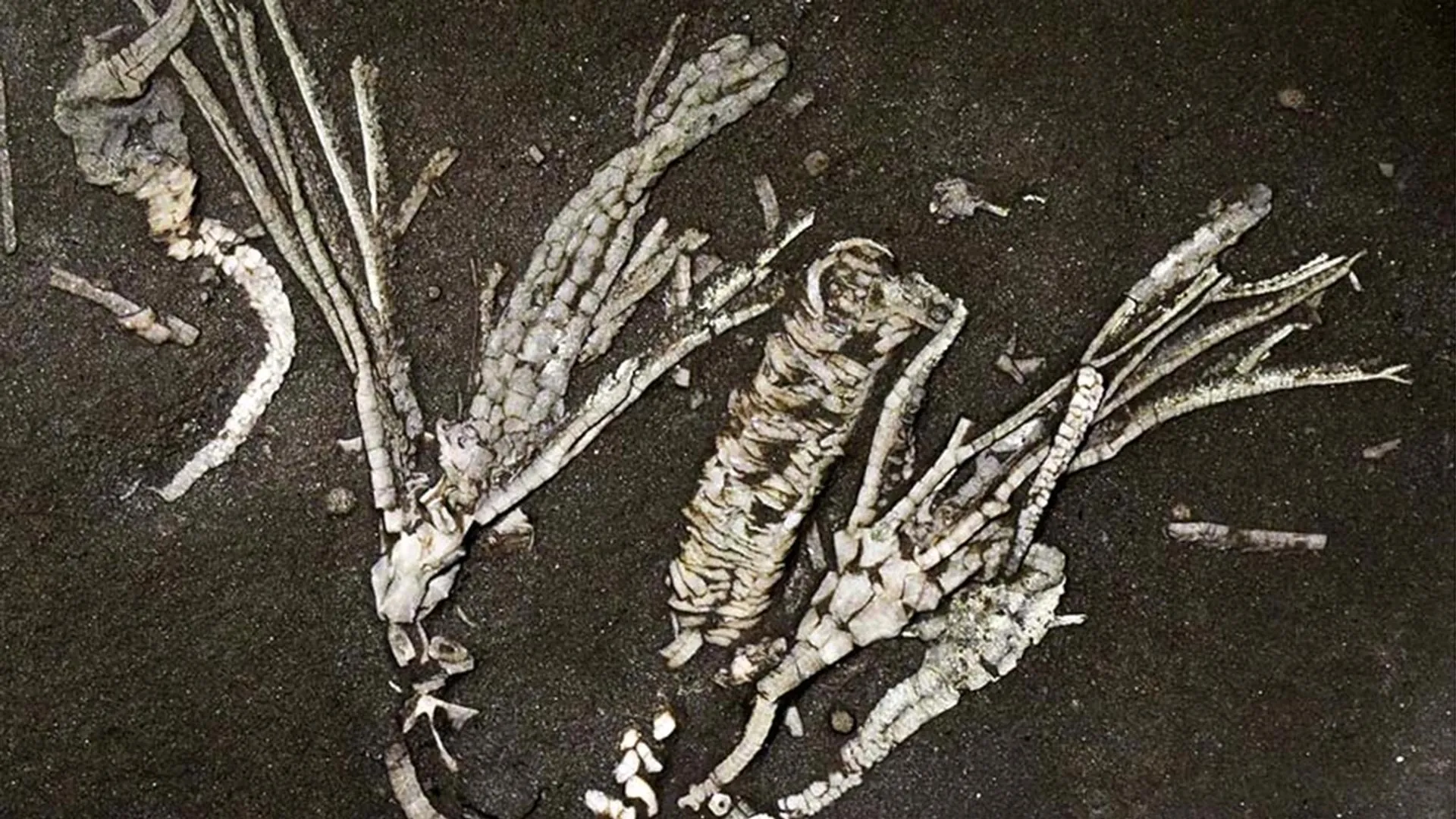
Scientists have discovered remarkably preserved soft tissue within a 450-million-year-old crinoid fossil, offering unprecedented insights into the life of early reef animals. The discovery, dating back to a period over 200 million years before the dinosaurs, sheds light on how these creatures lived, fed, and evolved.
The fossil, identified as a crinoid – a marine animal related to starfish and sea urchins – contains delicate tube feet that have been preserved for 450 million years. Researchers state this is an exceptionally rare find, providing a new window into the biology of some of Earth’s earliest reef inhabitants. The preservation of soft tissue is particularly significant, as it rarely survives the fossilization process.
According to the source, the preserved tube feet offer valuable information about how the crinoid interacted with its environment. These structures were likely used for feeding and locomotion. The find allows scientists to better understand the evolutionary history of these animals and their role in ancient marine ecosystems.
Read the original coverage
💬 Comments
📜 Comment Policy