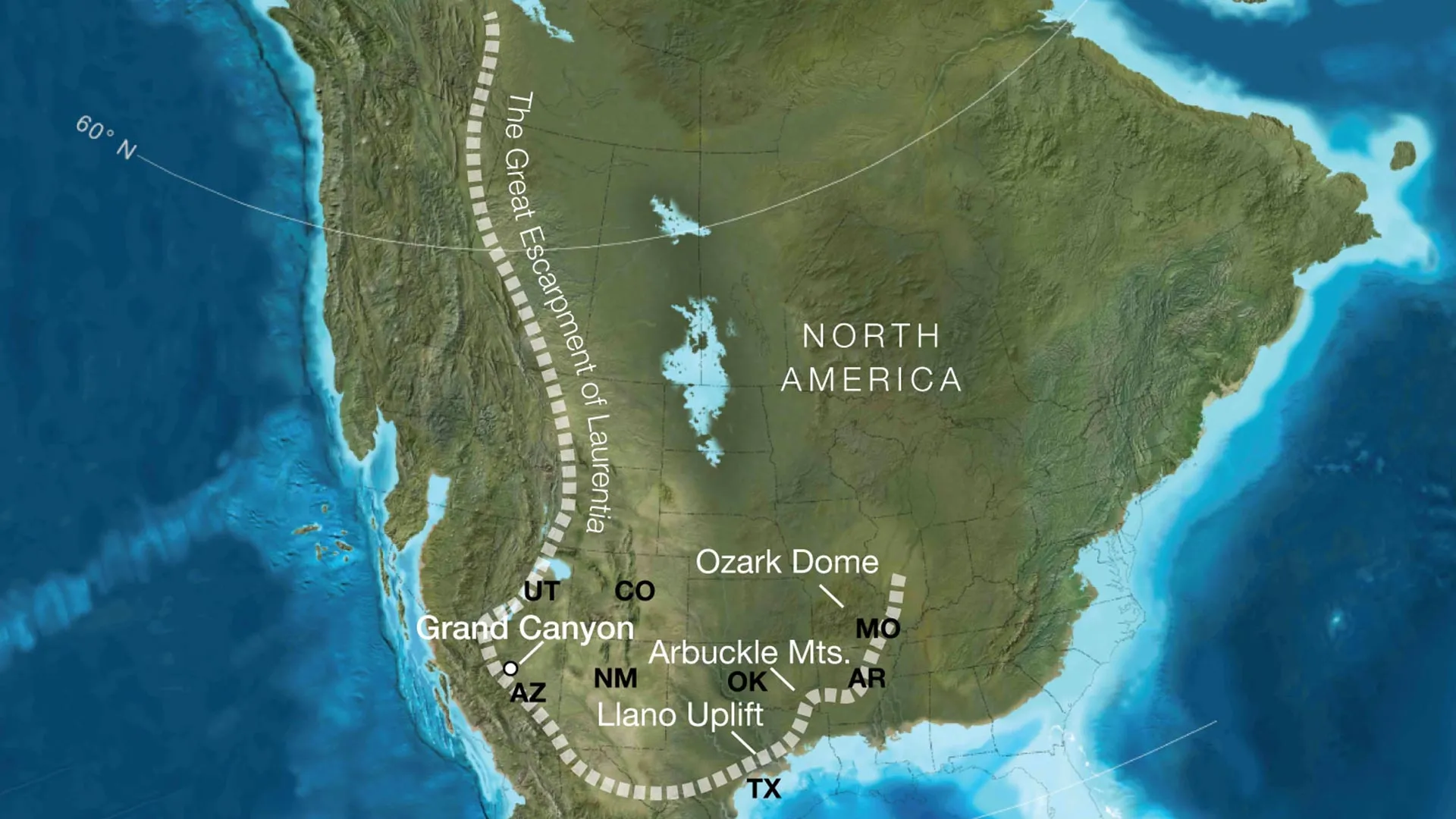
A newly proposed theory suggests a massive cliff system, formed during the breakup of the supercontinent Rodinia, predates and potentially explains the formation of the Grand Canyon. This ancient landscape could also account for significant gaps in North America’s geological record.
A colossal cliff system created as the supercontinent Rodinia broke apart may have exposed the heart of the Grand Canyon nearly a billion years before the Colorado River carved it, according to research published by ScienceDaily. The findings suggest this ancient landscape could also help explain why enormous sections of North America’s geological record appear to be missing.
The research posits that this mega-cliff formed as Rodinia fragmented. This process would have created a significant escarpment, exposing deeply buried rock layers. The source does not name the researchers involved. The implication is that the Colorado River later exploited this pre-existing geological feature when carving the Grand Canyon, rather than creating the canyon entirely from scratch.
The missing billion years refers to a substantial gap in the geological record of the Grand Canyon region. Scientists have long puzzled over the lack of rock layers representing a significant period of time. This new theory offers a potential explanation: the Rodinia-related cliff system eroded away a vast amount of the intervening rock, effectively erasing that portion of geological history.
Read the original coverage
💬 Comments
📜 Comment Policy