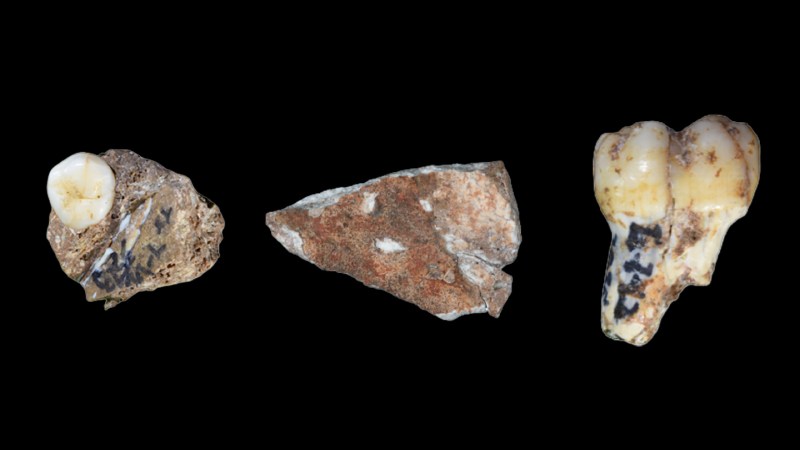
Archaeologists have uncovered a significant collection of Denisovan fossils in Bianfu Cave, China, providing new insights into the lives of this ancient human species. The remains, dating back between 167,000 and 134,000 years ago, were found alongside tools and animal remains.
The discovery, detailed in two studies published September 9 in *Nature*, represents the richest Denisovan fossil trove outside of Siberia. Previously, only a handful of Denisovan fossils had been found. Researchers identified the remains – four teeth, two skull fragments, and an arm bone piece – through protein analysis and high-quality X-ray scans.
Qiaomei Fu, a molecular paleogeneticist at the Chinese Academy of Sciences in Beijing, stated the samples carried a Denisovan-specific collagen variant, confirming their identification. Clément Zanolli, a paleontologist at the University of Bordeaux, France, noted the teeth shared similarities with other Denisovan teeth found in Laos and Tibet, immediately suspecting their origin upon seeing a picture of one.
The findings are significant because they offer a glimpse into how Denisovans lived. Shara Bailey, a paleoanthropologist at New York University, explained the cave “tells us a little about how Denisovans actually lived on the landscape,” adding that “Denisovans are becoming a bit less mysterious.” The presence of butchered animal remains and over 1,300 tools alongside the fossils provides context to their daily lives.
Denisovans, a sister species to modern humans, lived across Asia an estimated 400,000 to 30,000 years ago. While their genetic legacy is present in modern populations across the Philippines, Tibet, New Guinea, and Australia, limited fossil evidence has hindered understanding of their culture and behavior. Bence Viola, a paleoanthropologist at the University of Toronto, noted the frustration of previous finds lacking context regarding burial sites or associated artifacts. The Bianfu Cave discovery addresses some of those limitations.
Read the original coverage
💬 Comments
📜 Comment Policy