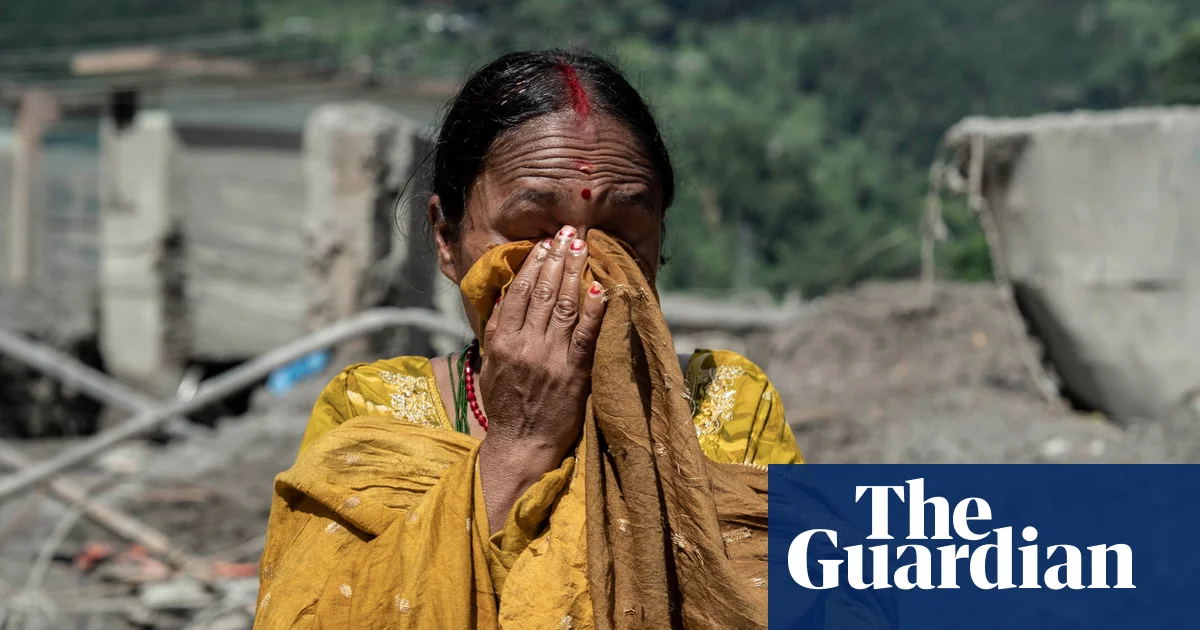
A glacial lake outburst flood in Nepal has killed at least 579 people and left over 1,900 missing as of Friday, with rescue efforts hampered by difficult terrain and rising river levels. The disaster began Wednesday morning when a melting glacier between Tibet and Nepal splintered, triggering a cascade of water, mud, and debris down the Bhote Koshi River. The impact was initially reported as an earthquake.
Sangke Dolma Tamang, 61, of Mailung village in the Rasuwa district, lost her husband and home in the flood. She recounted how her family ran for safety, but the waters swept her husband away despite attempts to rescue him. Murali Maiya Tamang, 60, also of Rusawa, watched her house wash away and is desperately awaiting news of her son, who was in the village at the time. Prem Bahadur Tamang is searching for his nephew, Sangyam Rumba, a tour guide last seen walking with foreign tourists along the Trishuli River. “How can anyone survive that flood? It came crashing down like a giant monster that ate everything up,” Prem said.
Rescue operations are focused on finding survivors, with helicopters transporting those rescued from flooded areas and delivering supplies. Brigadier General Raja Ram Basnet of the Nepali army stated that helicopter rescues would continue as long as people remain missing, acknowledging the difficulty in calculating the full death toll. US families are also awaiting news of approximately 90 Americans unaccounted for in the region. While Nepal reports a rapidly rising death toll, Chinese authorities claim only five deaths occurred on their side of the border, a discrepancy noted given the disaster’s epicenter. Ground rescue efforts were halted Friday due to rising river levels, but aerial rescues continue. The situation remains particularly opaque in Tibet due to tight media control.
The scale of the disaster is immense, with entire villages and neighborhoods wiped away, leaving countless people with little to no possessions. The long-term consequences for survivors and the region remain uncertain.
Read the original coverage
💬 Comments
📜 Comment Policy