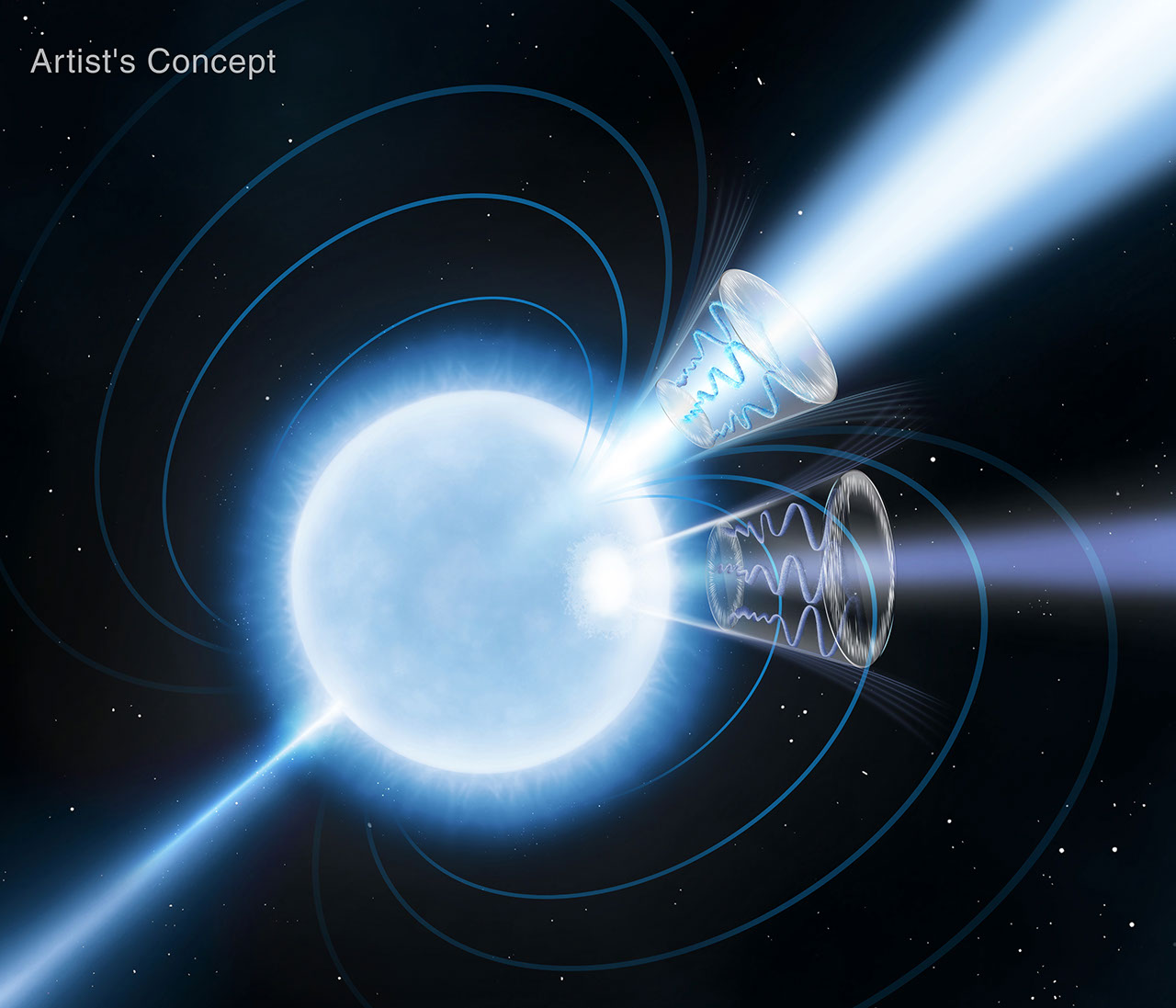
NASA’s Imaging X-ray Polarimetry Explorer (IXPE) may have confirmed a decades-old theory about how empty space behaves, through observations of the magnetar 1E 2032+424. The findings, published Wednesday in Nature, stem from over 140 hours of observation.
The research centers around a prediction made 90 years ago regarding the behavior of light as it travels through strong magnetic fields. Scientists using IXPE have potentially captured evidence of this predicted effect while studying the magnetar 1E 2032+424. A magnetar is a type of neutron star with an extremely powerful magnetic field.
The observations involved more than 140 hours dedicated to analyzing data from the magnetar. The results, published in Nature on Wednesday, represent a first-of-its-kind measurement that could validate the long-standing theoretical framework. IXPE is designed to measure the polarization of X-rays, providing insights into extreme cosmic environments like magnetars.
The significance lies in potentially confirming a prediction about how empty space responds to intense magnetic fields – a phenomenon physicists have theorized for nearly a century but haven’t directly observed until now.
We don't rate truth. We strip the spin and show you which perspectives covered the story. You decide.
Read the original coverage
💬 Comments
📜 Comment Policy