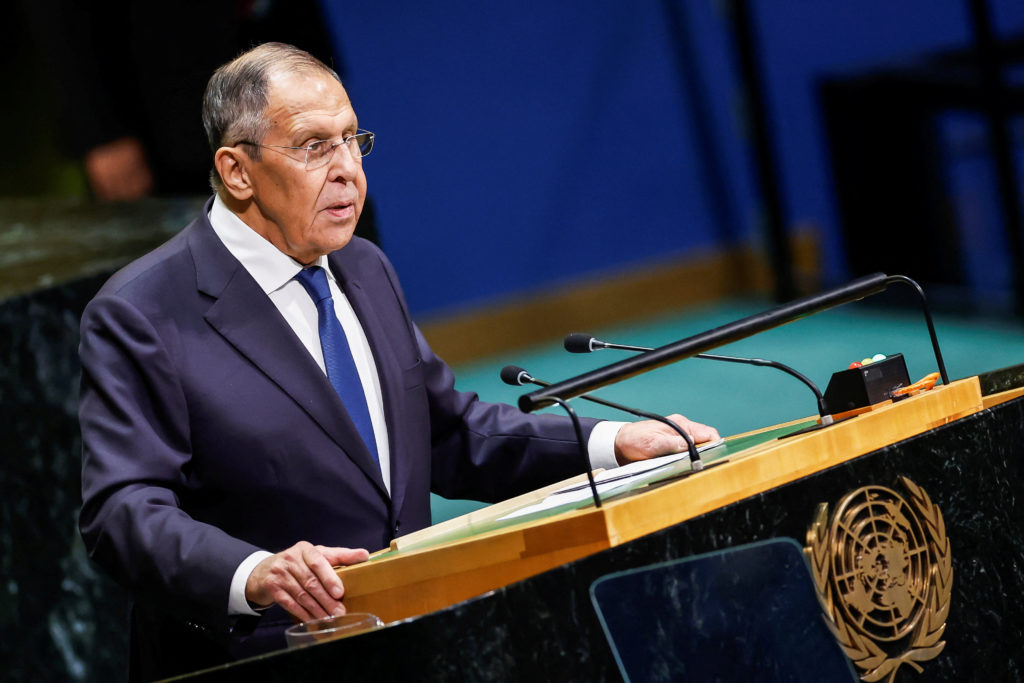
German Foreign Minister Johann Wadephul and Russian Foreign Minister Sergey Lavrov held a rare meeting Saturday on the sidelines of the U.N. General Assembly, believed to be the first such encounter since Russia’s full-scale invasion of Ukraine in 2022. Wadephul urged Russia to abandon what he called its “dangerous path of escalation” toward Germany, Europe, and the NATO alliance, according to a German delegation official. The meeting occurred as tensions between the European Union and Russia have increased, immediately before Lavrov addressed world leaders at the U.N. General Assembly.
While the meeting marks a rare instance of direct contact between the two nations’ top diplomats, the substance of their discussion remains largely undisclosed. The German side explicitly raised concerns about Russia’s escalating actions and their potential impact on European security. The timing of the meeting, ahead of Lavrov’s address to the General Assembly, suggests an attempt by Germany to directly convey its concerns to Russia at a high level.
Left-leaning and right-leaning outlets both reported the meeting, but neither provided extensive detail beyond the fact of the encounter and the German request for de-escalation. The Washington Times focused on the rarity of the meeting itself, while PBS NewsHour highlighted Wadephul’s direct appeal to Russia.
Our reading is that this meeting, while yielding no immediately reported outcomes, represents a German attempt to directly address escalating tensions with Russia despite a backdrop of significant diplomatic fallout. The timing, immediately before Lavrov’s U.N. address, suggests a desire to deliver a clear message about Germany’s concerns, even if the likelihood of immediate de-escalation appears low given the recent reciprocal consulate closures and broader regional instability. The fact that both left-leaning and hard-right outlets reported the meeting, albeit with limited detail, suggests a broad recognition of its significance as a rare instance of direct communication.
Read the original coverage
💬 Comments
📜 Comment Policy