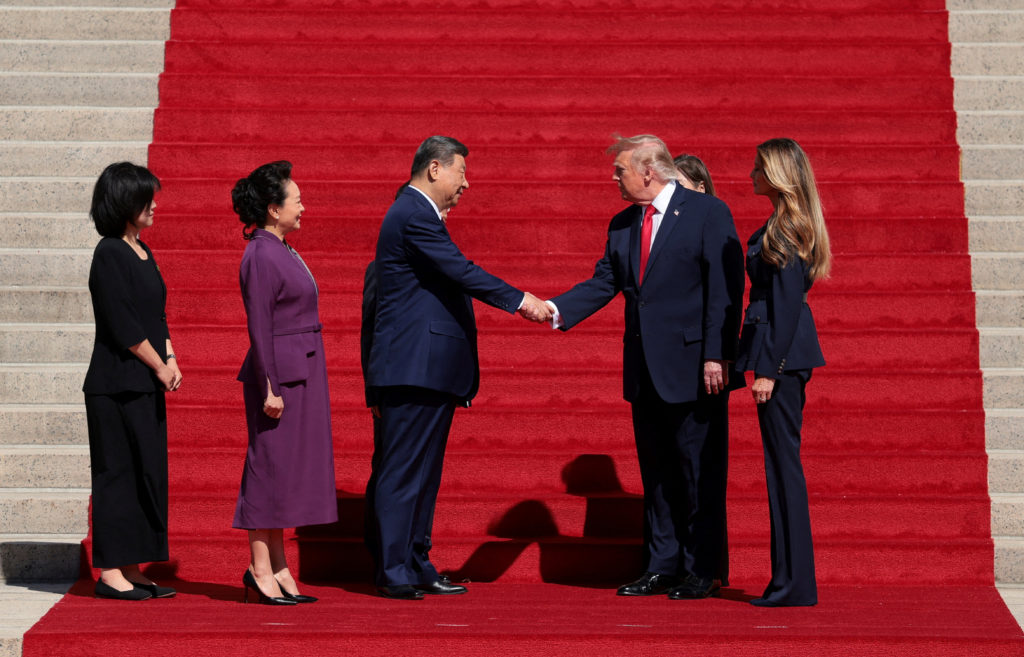
The United States and China have agreed to establish a channel for handling AI-related incidents and to accelerate work on military crisis communications following a three-day summit between Presidents Xi Jinping and Donald Trump. The two governments also agreed to continue cooperating through a Board of Trade focused on bilateral issues and to extend a trade truce by two months, including a commitment from China to import at least 10 million metric tons of coal from the US in 2027 and 2028. While the summit produced no major breakthroughs, analysts suggest the establishment of working groups is an important step toward preventing disputes from escalating.
Both sides will set up a communication mechanism for artificial intelligence-related incidents, with an AI-specific dialogue scheduled for November. Mr. Trump has repeatedly expressed a preference for the term “super intelligence” (SI) rather than “artificial intelligence” (AI), arguing that “artificial” implies something fake. He also indicated the US would not slow its AI development, stating, “The United States of America is not going to be putting on brakes,” and that the US is “leading by at least a year, maybe a year and a half.”
In addition to AI and military communications, the two sides agreed to reduce reciprocal tariffs on roughly $30 billion worth of “non-sensitive goods,” such as agricultural products and holiday decorations. The agreement builds on a previous trade truce reached last October. China and the US also agreed that Iran should not have nuclear weapons and that no country should impose transit tolls on international waterways, such as the Strait of Hormuz.
Mr. Trump displayed unusual warmth toward Xi during the visit, despite having escalated a trade war with China the previous year. Xi returned to Beijing on Saturday and is scheduled to travel to the US again in December for a G20 summit hosted by Mr. Trump at his National Doral Miami golf club. A second meeting between the two leaders is planned in November during the Asia-Pacific Economic Cooperation summit in China.
Our reading is that this summit prioritizes de-escalation and establishing communication channels over achieving immediate, substantive agreements. The focus on working groups and extended truces suggests a desire to manage the relationship rather than resolve underlying disagreements. President Trump’s emphasis on “super intelligence” and his reluctance to slow AI development, coupled with the establishment of an AI-specific dialogue, indicates a competitive dynamic will continue alongside the cooperative efforts.
Read the original coverage
💬 Comments
📜 Comment Policy