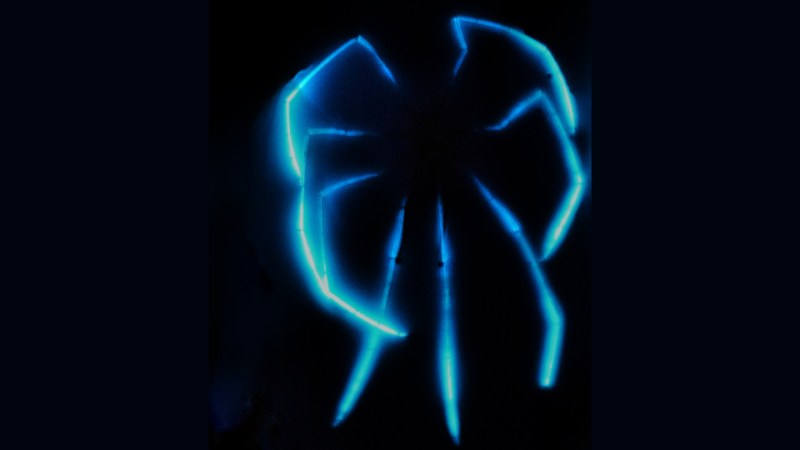
Marine biologist Jérôme Mallefet and his colleagues have documented bioluminescence in giant sea spiders off the coast of southeastern Australia. The spiders, specifically *Colossendeis tasmanica* and *C. minor*, emit a glow from their legs, potentially due to bioluminescent organisms in their diet.
During a 2017 expedition aboard the RV Investigator, Mallefet tested over 25,000 specimens from depths of up to nearly 5,000 meters. He found that 76 percent of deep-sea creatures produce their own light, a trait dating back 540 million years. While *Colossendeis tasmanica* produced a dim light initially, adding potassium chloride caused the spiders to glow for up to 10 minutes.
The discovery confirms sporadic historical descriptions of glowing sea spiders, including one from over a century ago describing the creatures as shining “like a star” with a blue radiance. The glow is primarily located on the underside of the spiders’ legs, near their digestive tracts, leading researchers to speculate the light originates from consumed organisms like sea anemones.
In addition to bioluminescence, all three sea spider species studied—*C. tasmanica*, *C. minor*, and another non-bioluminescent species—also fluoresced green under ultraviolet and blue light. Mallefet suggests the bioluminescence may serve to attract mates or help the spiders locate prey on the seafloor, collapsing onto them with a needlelike appendage to liquefy and consume tissue. Further research, including deep-sea video, is needed to confirm these hypotheses.
Read the original coverage
💬 Comments
📜 Comment Policy