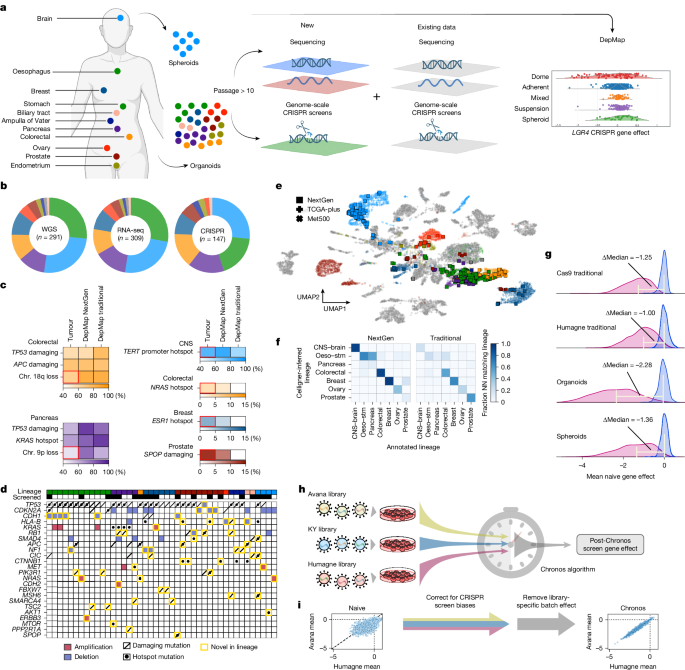
The Cancer Dependency Map has been enhanced by integrating genome-scale CRISPR screening data from both traditional cell lines and next-generation cancer models. This expansion aims to broaden the representation of various tumor subtypes and genomic alterations within the map.
The integration, published online August 5, 2026 in *Nature* (doi:10.1038/s41586-026-10843-7), leverages data from genome-scale CRISPR screening. This approach allows researchers to systematically identify genes essential for cancer cell survival. By combining this data with information derived from more sophisticated, next-generation cancer models, the Cancer Dependency Map is becoming a more comprehensive resource.
The primary goal of this enhancement is to improve understanding of cancer biology and potentially identify new therapeutic targets. The expanded map provides a richer dataset for researchers studying diverse cancers and genomic variations, ultimately aiming to accelerate progress in cancer treatment development.
We don't rate truth. We strip the spin and show you which perspectives covered the story. You decide.
Read the original coverage
💬 Comments
📜 Comment Policy