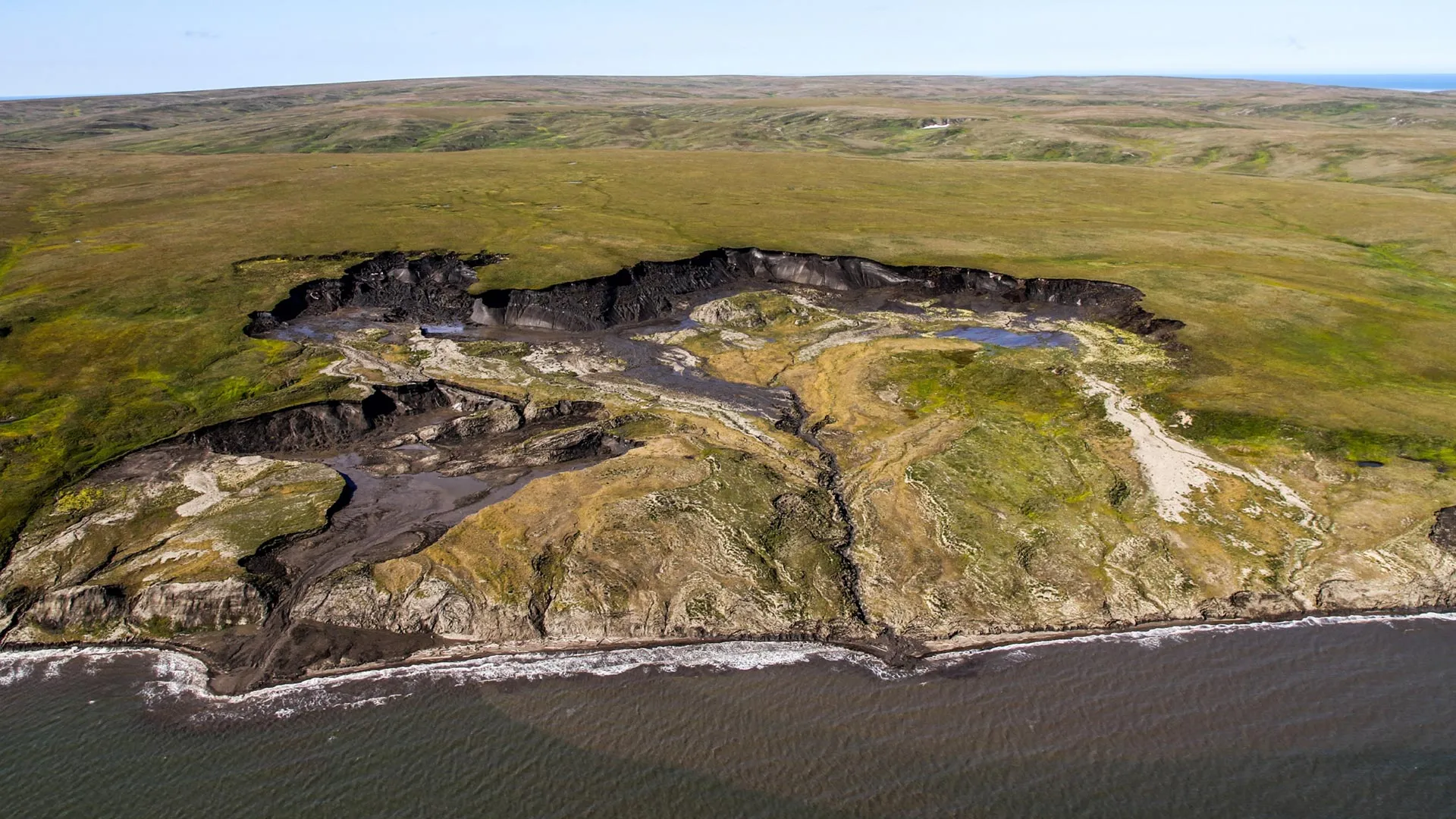
Thawing Arctic permafrost is releasing ancient carbon into the ocean, prompting concerns about its potential to exacerbate climate change. However, new research indicates that a significant portion of this carbon is being captured by the seafloor rather than converted into greenhouse gases.
Scientists have been concerned that as Arctic permafrost thaws, it will release large amounts of previously frozen organic matter – ancient carbon – into the ocean. The fear was that microbes would break down this carbon and transform it into greenhouse gases like carbon dioxide and methane, accelerating climate change. Recent findings offer a more optimistic perspective.
Researchers analyzed sediment cores collected near Canada’s Herschel Island to understand the fate of this land-based carbon. Their analysis revealed that most of the ancient carbon becomes buried in the seafloor. According to the study, approximately 10 percent is converted into gases, while the vast majority remains trapped within the sediment.
The research provides a crucial insight into the Arctic carbon cycle and its impact on global climate patterns. While the release of any greenhouse gas from thawing permafrost is concerning, the findings suggest that the ocean floor acts as an important carbon sink, mitigating some of the potential warming effects.
We don't rate truth. We strip the spin and show you which perspectives covered the story. You decide.
Read the original coverage
💬 Comments
📜 Comment Policy