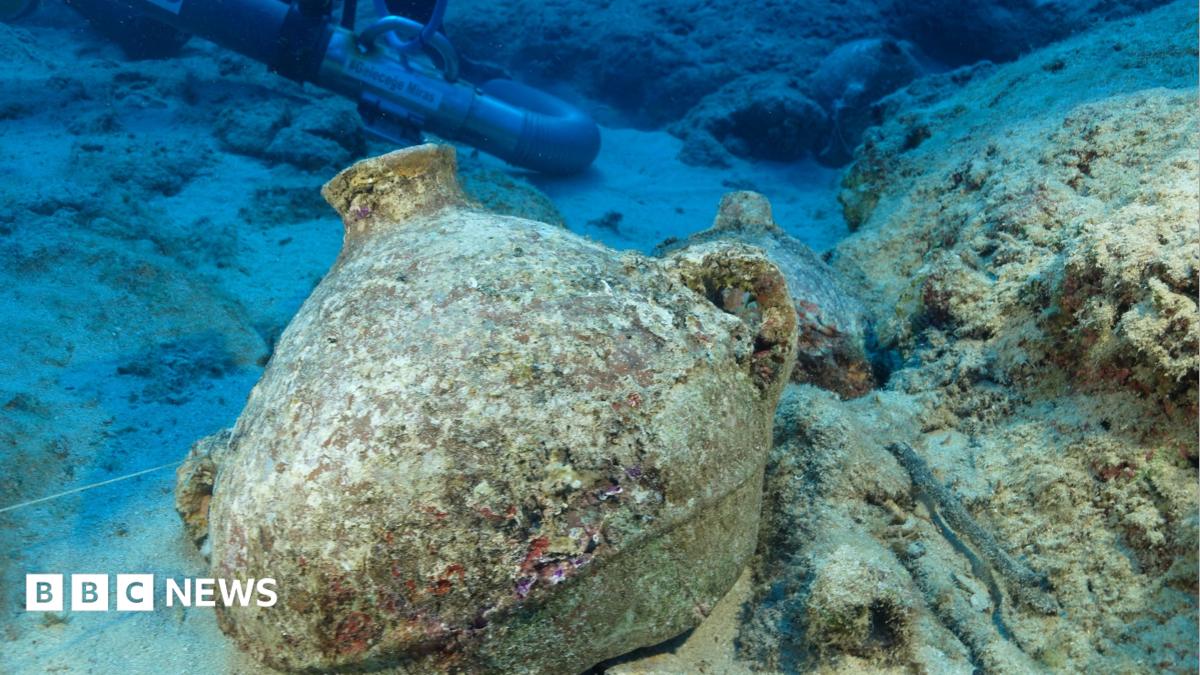
Archaeologists have discovered what they believe to be the world’s oldest shipwreck off the coast of Turkey, near Kekova Island in Antalya. The vessel, estimated to be between 4,400 and 4,700 years old, dates to the Early Bronze Age, contemporary with the construction of the Great Pyramid of Giza. While the ship’s wooden structure has not survived, over 30 ceramic storage pots, known as amphorae, and three stone anchors remain on the seabed, approximately 30 meters underwater.
The wreck was identified through the analysis of the amphorae’s shape and decoration, which match those found in Egypt and the Middle East from the same period. Researchers from Akdeniz University, leading the Mediterranean Archaeology Association expedition, determined the ship was likely a trade vessel traveling across the Mediterranean Sea, potentially originating from the eastern coast and heading towards ancient Troy. Some of the amphorae still contain traces of residue, which scientists are analyzing to determine their original cargo, possibilities include olive oil, wine, or tree resins.
The discovery surpasses the previous oldest known shipwreck, the Dokos wreck in the Aegean Sea, which dates to around 2200 BC. Dr. Karin Sowada, an archaeologist from Macquarie University, was surprised by the amount of residue remaining inside the amphorae after thousands of years underwater. The team is now focused on conserving the artifacts and further investigating the ship’s origins and purpose. The anchors found at the site resemble those used in the Bronze Age by Minoan, Cypriot, Anatolian, and Levantine cultures. The wreck is providing insights into ancient trade routes and anchoring technology. The fact that the ship sank while sailing east to west during the Early Bronze Age is currently understood, but the exact nature of its final voyage remains under investigation.
Read the original coverage
💬 Comments
📜 Comment Policy