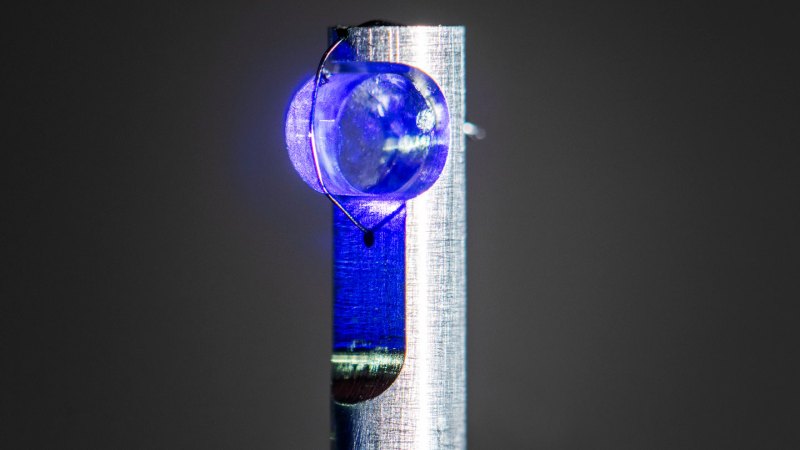
The world's first nuclear clocks have successfully ticked on for the first time. This achievement marks a significant milestone in experimental physics. First dreamed up decades ago, the world's first nuclear clocks are set to improve quickly, becoming more precise and aiding the hunt for dark matter. Researchers initially conceptualized the technology as a theoretical framework, but sustained scientific effort has finally enabled its operation. The successful activation confirms that the long-standing vision has transitioned into a functional reality.
Experts anticipate that performance will advance rapidly as development continues. As engineers refine the systems, the instruments will become more precise than previous timekeeping standards. This rapid progression in accuracy is expected to establish new benchmarks for temporal measurement. The immediate focus remains on maximizing stability while reducing operational variance. These incremental gains will collectively push the boundaries of measurable precision.
Beyond their role in timekeeping, these advanced clocks will serve a critical function in astrophysics. Their enhanced sensitivity directly supports the hunt for dark matter. By providing unprecedented measurement capabilities, the technology offers researchers a powerful new tool to investigate unknown cosmic phenomena. The precision gains will allow scientists to detect subtle physical variations that were previously unmeasurable.
The successful debut represents a definitive shift from theoretical proposal to practical application. What began as an idea decades ago has now materialized into a functioning instrument. Continued refinement will ensure these devices maintain their trajectory toward greater accuracy. The ongoing development process will ultimately expand the scope of observable phenomena in modern physics.
We don't rate truth. We strip the spin and show you which perspectives covered the story. You decide.
Read the original coverage
💬 Comments
📜 Comment Policy