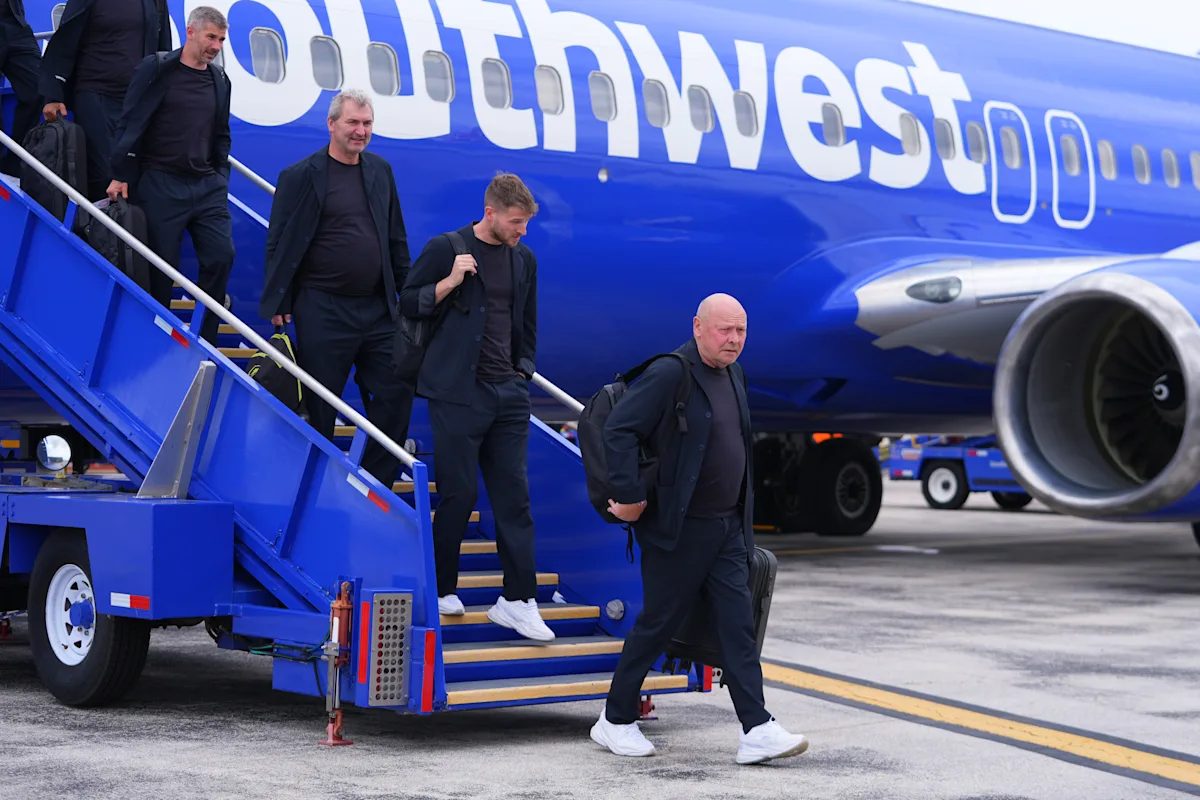
The upcoming FIFA World Cup, spread across the United States, Canada, and Mexico, is imposing unprecedented travel demands on participating national teams. The logistical challenge is particularly acute for squads that must traverse vast distances between their designated base camps and match venues.
The Czech Republic has already begun its campaign with a significant cross-border journey. The team traveled from its base camp in Dallas, Texas, to Guadalajara in Mexico for its opening matches. This initial leg of the tournament highlights the complex geography teams must navigate to reach their opponents.
Newcomers to the tournament, such as Curacao, face even more grueling schedules. The island nation is expected to cover approximately 5,300 miles (8,600 kilometers) in round-trip travel from its base in Florida. Their itinerary includes games in Houston, Kansas City, and Philadelphia, requiring multiple long-haul flights across the United States.
Similarly, Bosnia-Herzegovina will accumulate nearly 5,200 miles (8,400 kilometers) of travel. The team is based in Utah but must compete in cities located in both Canada and the U.S., specifically Toronto, Los Angeles, and Seattle. This extensive movement underscores the logistical strain placed on teams during a tournament that spans three different countries.
The sheer volume of miles traveled by these teams illustrates the unique challenges of hosting a global sporting event across such a large geographic area. While traditional World Cups are often confined to a single nation or a smaller region, this iteration requires teams to manage constant transit, potentially impacting player fatigue and preparation time.
These travel requirements are not merely statistical footnotes but critical factors in team management. Coaches and support staff must coordinate complex logistics to ensure players arrive rested and ready for competition. The disparity in travel distances between teams could also introduce an element of unpredictability, as some squads may face more arduous journeys than others.
As the tournament progresses, the impact of these extensive travels will likely become a topic of discussion among analysts and fans alike. The ability to manage such logistical demands may prove to be as important as tactical preparation in determining which teams succeed on the field.
We don't rate truth. We strip the spin and show you which perspectives covered the story. You decide.
Read the original coverage
💬 Comments
📜 Comment Policy