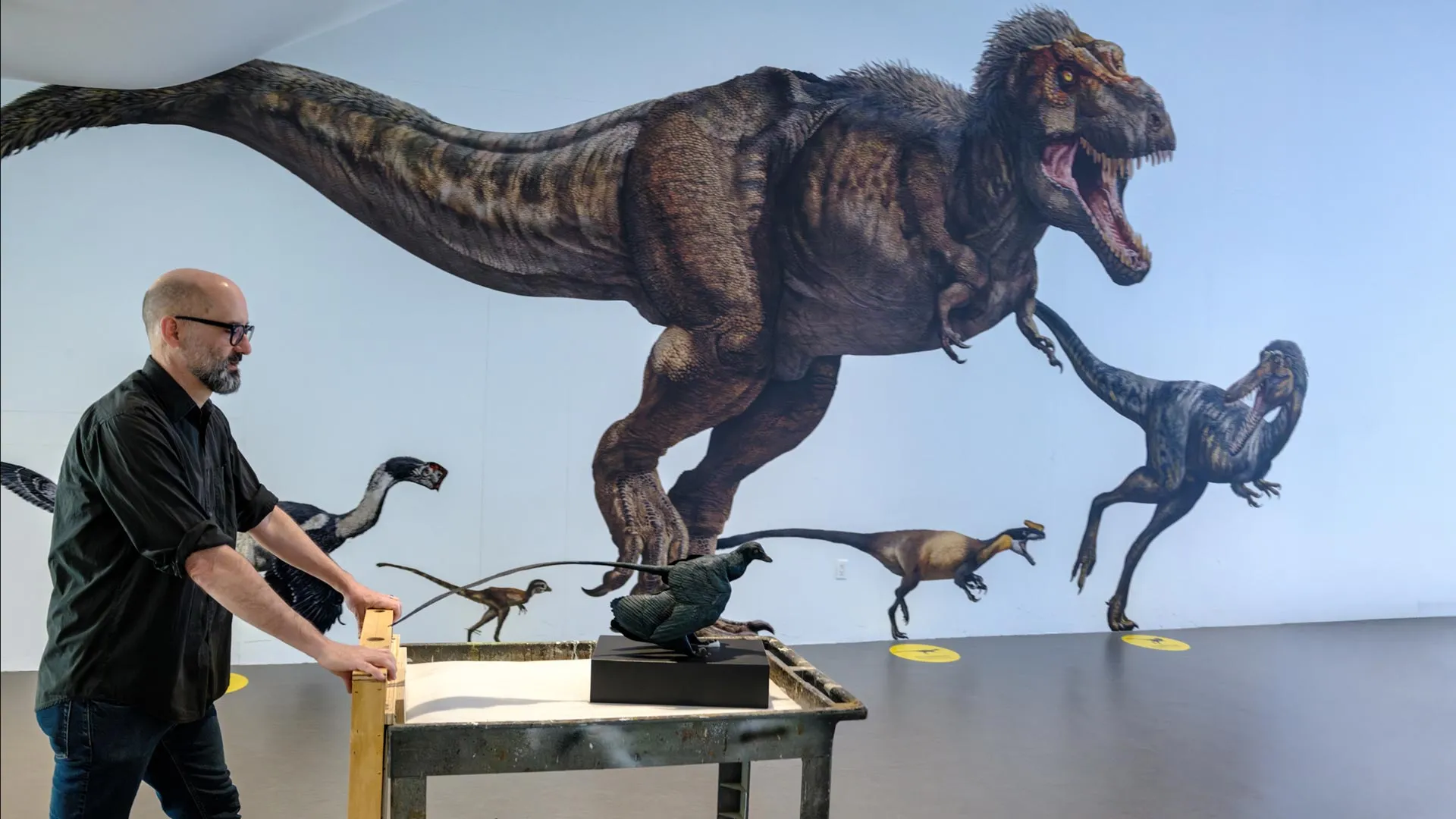
Dinosaurs achieved massive sizes, but curiously never evolved to be very small. New research suggests physiological limitations weren’t the sole reason, and that early mammals may have played a role by occupying niches that could have supported smaller dinosaurs.
A new study explores why dinosaurs conquered land with enormous builds yet seemingly avoided evolving into truly tiny animals. While it's well-established that dinosaurs prevented mammals from growing large for extended periods, researchers are now proposing the reverse might also be true: small mammals may have inhibited the evolution of miniature dinosaurs.
The research indicates that physiology alone doesn’t fully explain the absence of very small dinosaurs. The study posits that early mammals occupied ecological niches – specific roles within an environment – that could otherwise have been filled by dinosaur species around the size of a mouse. This competition for resources and survival may have prevented dinosaurs from successfully evolving smaller forms.
The findings suggest a complex interplay between dinosaur and mammal evolution, where each group influenced the other’s trajectory. Dinosaurs kept mammals small through their dominance, while small mammals, in turn, potentially restricted the lower size limits of dinosaur evolution.
We don't rate truth. We strip the spin and show you which perspectives covered the story. You decide.
Read the original coverage
💬 Comments
📜 Comment Policy