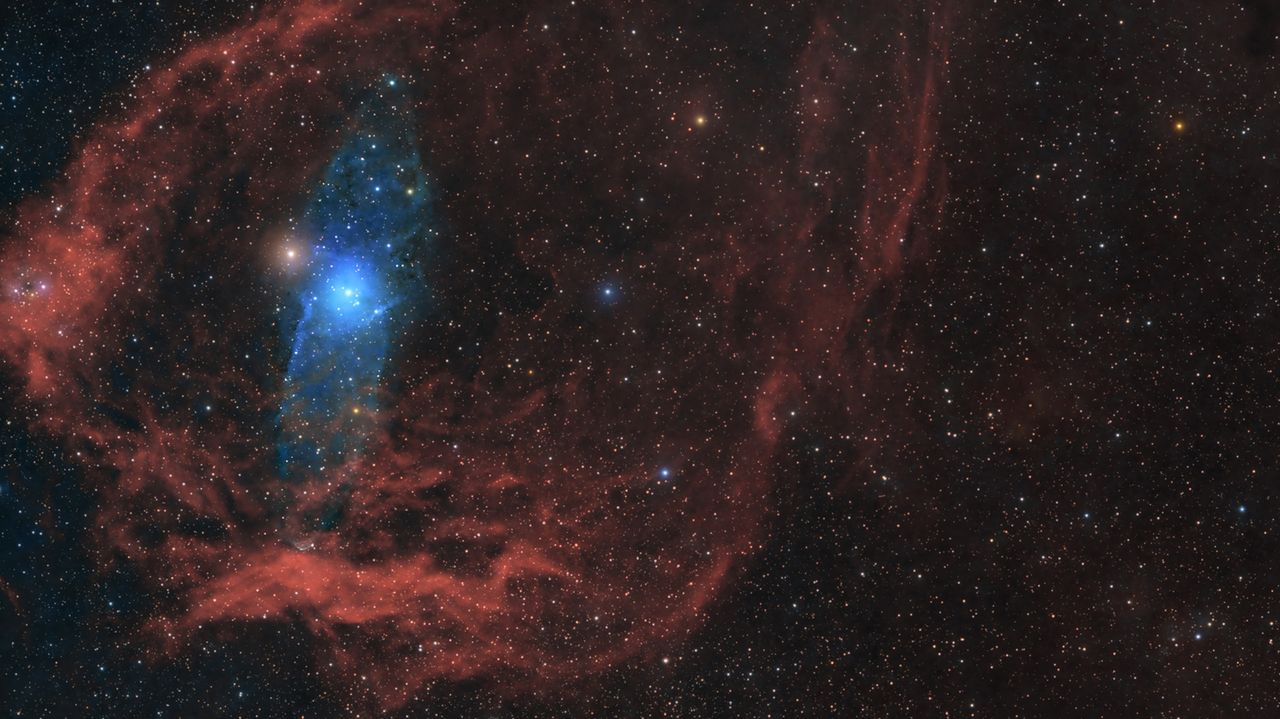
Astronomers are proposing a new explanation for the prevalence of mysterious "little red dots" observed in early universe surveys conducted by the James Webb Space Telescope (JWST). These dots, representing extremely distant and potentially very old galaxies, have puzzled scientists. The newly proposed theory centers around 'little blue companions' – smaller, actively star-forming galaxies merging with the larger red ones.
The source details that astronomers may have found an unexpected origin for these common features in JWST surveys of the early universe. These “little red dots” are appearing frequently in data collected by the telescope, prompting investigation into their nature and formation.
According to the research, the 'red dots' aren’t necessarily ancient, massive galaxies as initially suspected. Instead, they may be younger galaxies that appear red due to dust obscuring star formation. The key to understanding this lies in the presence of smaller, actively star-forming “little blue companions” merging with them. These mergers trigger bursts of star formation and contribute significantly to the observed redness.
The theory suggests that these 'blue companions' are responsible for a significant portion of the light we see from these early galaxies. This discovery could reshape our understanding of how galaxies formed and evolved in the universe’s infancy, offering new insights into the conditions present shortly after the Big Bang.
We don't rate truth. We strip the spin and show you which perspectives covered the story. You decide.
Read the original coverage
💬 Comments
📜 Comment Policy