The Vasquez Rocks Natural Area in Southern California features unusually tilted sedimentary rock formations, averaging a 50-degree angle. These formations were created over 25 million years through alluvial fan deposits, tectonic plate interaction, and erosion, and have become a popular filming location, notably for the *Star Trek* franchise.
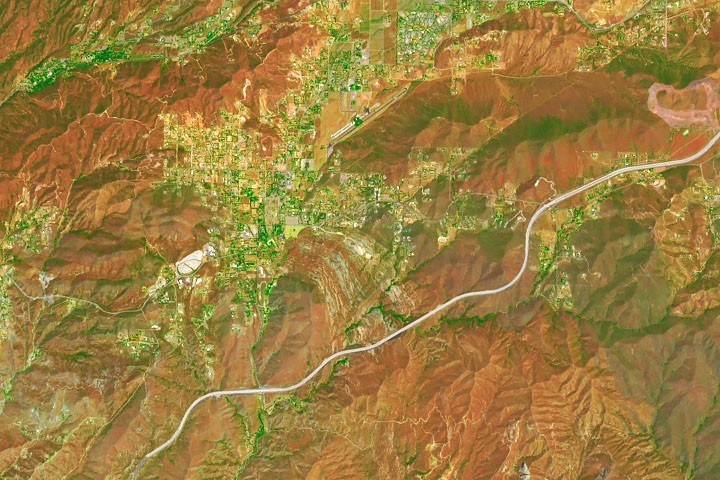
Geologists estimate the tilt of sedimentary rock strata at Vasquez Rocks averages 50 degrees, giving the formations an otherworldly appearance. Captured by Landsat 9, the rocks appear as gray bands nestled between mountain ranges. The false-color view accentuates vegetation differences compared to the natural-color image.
The rocks began forming 25 million years ago as sediment accumulated in cone-shaped alluvial fans. This sediment, eroded from nearby uplands, eventually cemented into sandstone and conglomerate. Tectonic activity, specifically the movement of the North American and Pacific plates along the San Andreas Fault, uplifted and deformed the Soledad Basin, tilting, folding, and rotating the sedimentary layers. Subsequent weathering and erosion sculpted the resistant sandstone and conglomerate into the fins and ridges seen today.
Vasquez Rocks are famous for their appearances in science fiction. Captain James T. Kirk scrambled across the jagged terrain in an iconic battle during the inaugural season of *Star Trek*. The formations have also represented far-flung moons and planets in other *Star Trek* episodes and Vulcan, Spock's home planet, in two *Star Trek* movies. Other productions featuring the rocks include *Westworld*, *For All Mankind*, and *Battlestar Galactica*.
Read the original coverage
💬 Comments
📜 Comment Policy