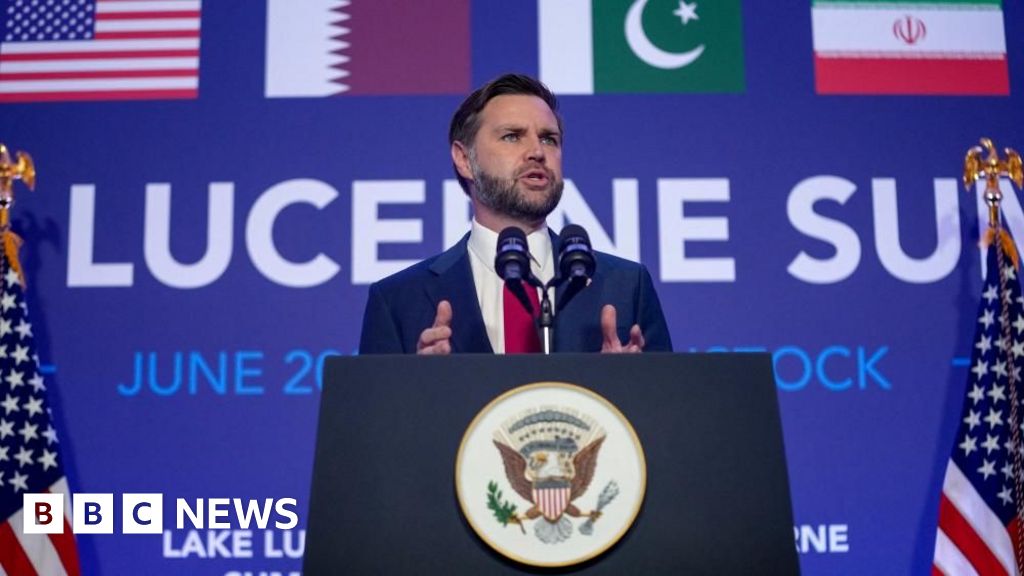
U.S. Vice President J.D. Vance announced on Monday that Iran has agreed to allow international nuclear inspectors back into the country, marking a significant development in ongoing diplomatic negotiations between Washington and Tehran. The announcement came after the first round of talks between the two nations, which Vance described as productive.
According to reports from CBS News, Vance stated that Iran agreed to let international nuclear inspectors return during what he characterized as a "very, very good" first day of negotiations with the United States. This agreement involves inviting inspectors from the International Atomic Energy Agency (IAEA) into Iranian territory to conduct inspections of nuclear sites. The Axios report confirms that Vice President JD Vance made this announcement following the initial phase of U.S.–Iran discussions.
Vance further elaborated on the diplomatic progress, telling the Washington Times that Iran has agreed to allow inspectors from the United Nations' nuclear watchdog agency to inspect its nuclear facilities. He described this agreement as part of a "good foundation" for ending the war, highlighting the strategic importance of the inspection regime in broader conflict resolution efforts.
The BBC US reported that Vance said a great deal of progress had been made after this first round of talks between the U.S. and Iran. While specific details regarding the scope or timeline of the inspections were not fully detailed in the immediate reports, the consensus among the sources is that the agreement represents a tangible step forward in diplomatic engagement.
The involvement of the International Atomic Energy Agency is central to these developments. The IAEA serves as the United Nations' nuclear watchdog agency, tasked with verifying compliance with non-proliferation treaties and ensuring that nuclear energy is used for peaceful purposes. By agreeing to allow these inspectors back into the country, Iran has signaled a willingness to engage with international oversight mechanisms, a move that Vance has framed positively.
The reporting from multiple outlets indicates a unified narrative regarding the immediate outcome of the talks: an agreement on inspections. CBS News and Axios both focus on the specific action of resuming inspections, while the Washington Times places this within the broader context of ending hostilities. The BBC US emphasizes the general progress made during the negotiations.
No right-leaning sources reported on this story with distinct conflicting factual claims; however, the Washington Times is categorized as lean-right and provided the framing regarding the "good foundation" to end the war. Left-leaning sources were not present in this specific cluster of reports. Center-leaning sources (CBS News and Axios) provided the core factual reporting on the agreement itself.
The current status of the negotiations remains focused on the implementation of these inspection agreements. As the first round of talks concludes, the focus shifts to how these inspections will be conducted and what further diplomatic steps may follow. The U.S. administration, led by Vice President Vance, views this as a positive step toward resolving geopolitical tensions related to Iran's nuclear program.
Read the original coverage
💬 Comments
📜 Comment Policy