U.S. Orders Diplomats to Leave Saudi Arabia Amid Houthi Attacks
AI-synthesized · Bias removed · Facts only
3 sources: 2 left · 1 center · 0 right
Facts are sacred. Opinion is labelled.
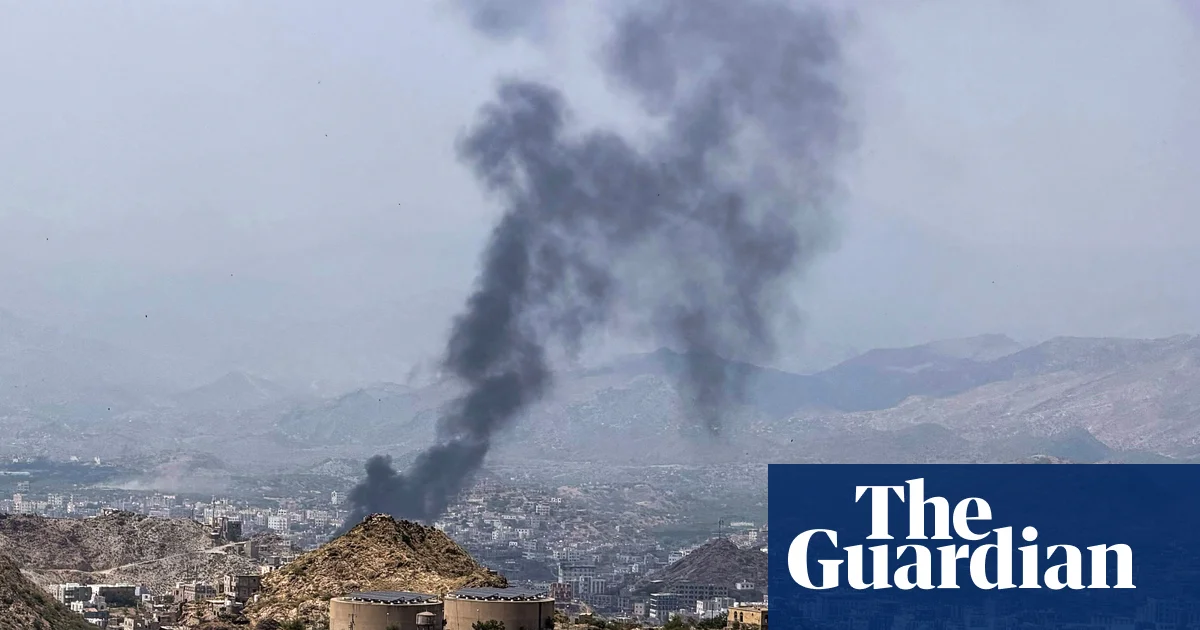
Image: Guardian Us
The U.S. State Department has ordered the departure of non-emergency government employees and family members from its mission in Saudi Arabia, citing escalating attacks by the Iran-aligned Houthi movement. The decision follows recent strikes on King Fahd International Airport in Dammam, which killed one person and injured eight, and a drone attack targeting a Saudi Aramco oil facility, resulting in two fatalities. While the State Department maintains this order applies only to Saudi Arabia, reports initially suggested potential withdrawals from other Gulf states, which officials have since described as inaccurate. The U.S. had previously reduced its diplomatic presence in the region following attacks on U.S. facilities after the U.S.-Israeli war on Iran began in late February, and some personnel had recently returned. The withdrawals occur against a backdrop of increased hostilities from the Houthis, including attacks on civilian infrastructure, and reports of potential plans by the Trump administration to restart strikes on Iran.
On Wednesday evening, one Saudi resident was killed and eight injured at King Fahd International Airport in Dammam due to Houthi attacks, causing some material damage and flight diversions. Separately, falling debris from the interception of a drone targeting an oil facility killed two and injured two more, according to the Saudi energy ministry. Neither attack was immediately claimed by the Houthis, but airports and oil facilities have been major targets in their recent wave of strikes.
The U.S. embassy in Riyadh and a CIA station there were attacked by drones in early March, as Iran launched attacks across the region. NBC News reported the U.S. military has been quietly scaling back its presence at bases across the Middle East, though a U.S. Central Command spokesperson stated service members are regularly moved to “optimize mission readiness.”
Where they differ
- Al Jazeera and NDTV emphasized the Houthis’ increasing engagement in hostilities against Saudi Arabia, directly quoting State Department spokesperson Tommy Pigott on the matter.
- The Financial Times highlighted the drone attack targeting Saudi Aramco’s Shaybah oilfield, while other sources provided broader details of the attacks.
- The South China Morning Post and Japan Times both noted the prior reduction of U.S. diplomatic personnel following attacks on U.S. facilities, framing it as a recent return of staff being partially reversed.
- The Guardian detailed the damage to the U.S. embassy in Riyadh at the start of the U.S.-Israeli war on Iran, a detail not present in other reports.
What is not yet known
- The extent to which the U.S. military is scaling back its presence at bases in the Middle East remains unclear, despite NBC News’ reporting and the statement from U.S. Central Command.
- Whether the Trump administration will ultimately pursue plans to restart strikes on Iran is unresolved, as reported by The New York Times.
Background
- The UK has deployed RAF Typhoon jets to Saudi Arabia to bolster air defenses against Houthi attacks, extending existing support by 90 days [Fact Refinery, 2026-10-20].
- The Houthis have engaged in escalating attacks on Saudi Arabia, targeting airports, energy sites, and civilian infrastructure, with a recent strike on a Yemeni training camp killing 53 [Fact Refinery, 2026-10-19; 2026-08-07].
- Prior to the current escalation, the U.S. reduced its diplomatic presence in the region following attacks on U.S. facilities, with some personnel recently returning [background knowledge; article text].
- A former OpenAI employee, Abdulrahman Alfozan, is accused of receiving Saudi government support and attempting to plant a recording device, raising national security concerns [Fact Refinery, 2026-10-19].
- Egypt has agreed to support Saudi Arabia in defending against Houthi attacks, as the conflict intensifies and impacts regional stability [Fact Refinery, 2026-10-18].
Our reading
Our reading is the U.S. is responding to a demonstrably worsening security situation in Saudi Arabia, evidenced by repeated attacks on critical infrastructure and the necessity of ordering non-essential personnel to depart. The partial reversal of a recent return of personnel suggests a reassessment of risk levels, and the mention of potential renewed strikes on Iran hints at a broadening consideration of options. The differing emphasis in media coverage, some focusing on Houthi actions, others on Saudi responses, highlights the complex and contested nature of this regional conflict.
What to watch
- A potential statement from the Saudi government regarding the attacks, specifically whether they claim responsibility or attribute them to Iran [Saudi Ministry of Defense/Foreign Affairs website].
- Confirmation of whether the Trump administration moves forward with plans to restart strikes on Iran, and the timing of any such action [U.S. Department of Defense press briefings].
- Figures on U.S. military presence in the Middle East, to assess the extent of the reported drawdown, as released by U.S. Central Command [U.S. Central Command official statements].
💬 Comments
📜 Comment Policy