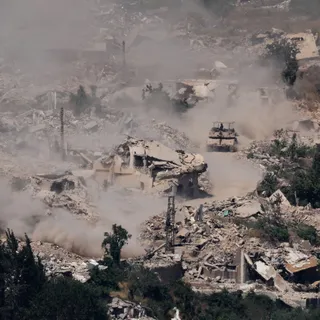
Two United States officials stated on Friday that Israel and the Iran-backed militia group Hezbollah had agreed to a renewed ceasefire in Lebanon. Despite this reported agreement, clashes between the parties continued to occur in the region. The announcement came shortly after the Israeli military launched airstrikes on southern Lebanon.
According to reports from Lebanese media, an Israeli airstrike took place in southern Lebanon on Friday. This event was reported after a U.S. official indicated that Israel and Hezbollah had reached an agreement to renew their ceasefire. Three officials confirmed this development regarding the potential pause in fighting between the two groups.
The timeline of events suggests a rapid sequence of military action followed by diplomatic signals. The Israeli military's airstrikes on southern Lebanon occurred just hours before the reports emerged regarding the agreed-upon pause in hostilities. The presence of these airstrikes highlights the volatile nature of the border region and the immediate context in which the ceasefire discussions took place.
Attribution for the ceasefire agreement varies among sources. Two U.S. officials provided information to Axios, stating that the agreement had been reached. Separately, three officials told Euronews that Israel and Hezbollah had agreed to renew their ceasefire. The Washington Times reported that both parties agreed to pause their fighting on Friday. These attributions indicate multiple channels of communication or reporting regarding the status of the conflict.
The involvement of Iran-backed groups remains a structural element of the conflict as described by the sources. The Washington Times identified Hezbollah as an Iran-backed militia group. This characterization is consistent with the structural definition of the group's affiliations and funding sources, distinguishing it from other political entities that may not meet such criteria.
Clashes continued despite the reported agreements. Axios noted that while the U.S. officials claimed an agreement was in place, clashes persisted. This discrepancy between the reported diplomatic agreement and the ongoing military activity underscores the complexity of the situation on the ground. The continuation of hostilities suggests that the implementation or enforcement of the ceasefire may face significant challenges.
The role of international observers and officials is evident in the reporting. U.S. officials played a key role in communicating the status of the negotiations to the public and media outlets. Their statements served as the primary source for the initial reports of the ceasefire agreement. The involvement of these officials highlights the international interest in stabilizing the region and preventing further escalation.
Lebanese media provided additional context by reporting on specific military actions, such as the airstrike in southern Lebanon. This local perspective complements the diplomatic reports from U.S. officials, offering a more comprehensive view of the events unfolding in the area. The combination of diplomatic announcements and on-the-ground reporting provides a fuller picture of the current state of the conflict.
The agreement to renew the ceasefire represents a potential shift in the dynamics of the Israel-Hezbollah conflict. If implemented effectively, it could lead to a reduction in violence and humanitarian suffering in southern Lebanon. However, the continued clashes indicate that the situation remains fragile and uncertain. The effectiveness of the ceasefire will depend on the adherence of both parties to the agreed-upon terms and the ability of international actors to monitor compliance.
As of Friday, the status of the ceasefire remains subject to ongoing developments. While officials report an agreement, the physical reality on the ground continues to show signs of conflict. The coming days will be critical in determining whether the ceasefire holds or if further escalation is likely. International attention remains focused on the region as stakeholders monitor the situation closely.
Read the original coverage
💬 Comments
📜 Comment Policy