U.S. Military Strikes Iranian Oil Tankers Following Attacks on Navy Warship
AI-synthesized · Bias removed · Facts only
3 sources: 3 left · 0 center · 0 right
Facts are sacred. Opinion is labelled.
Image: Nbc News
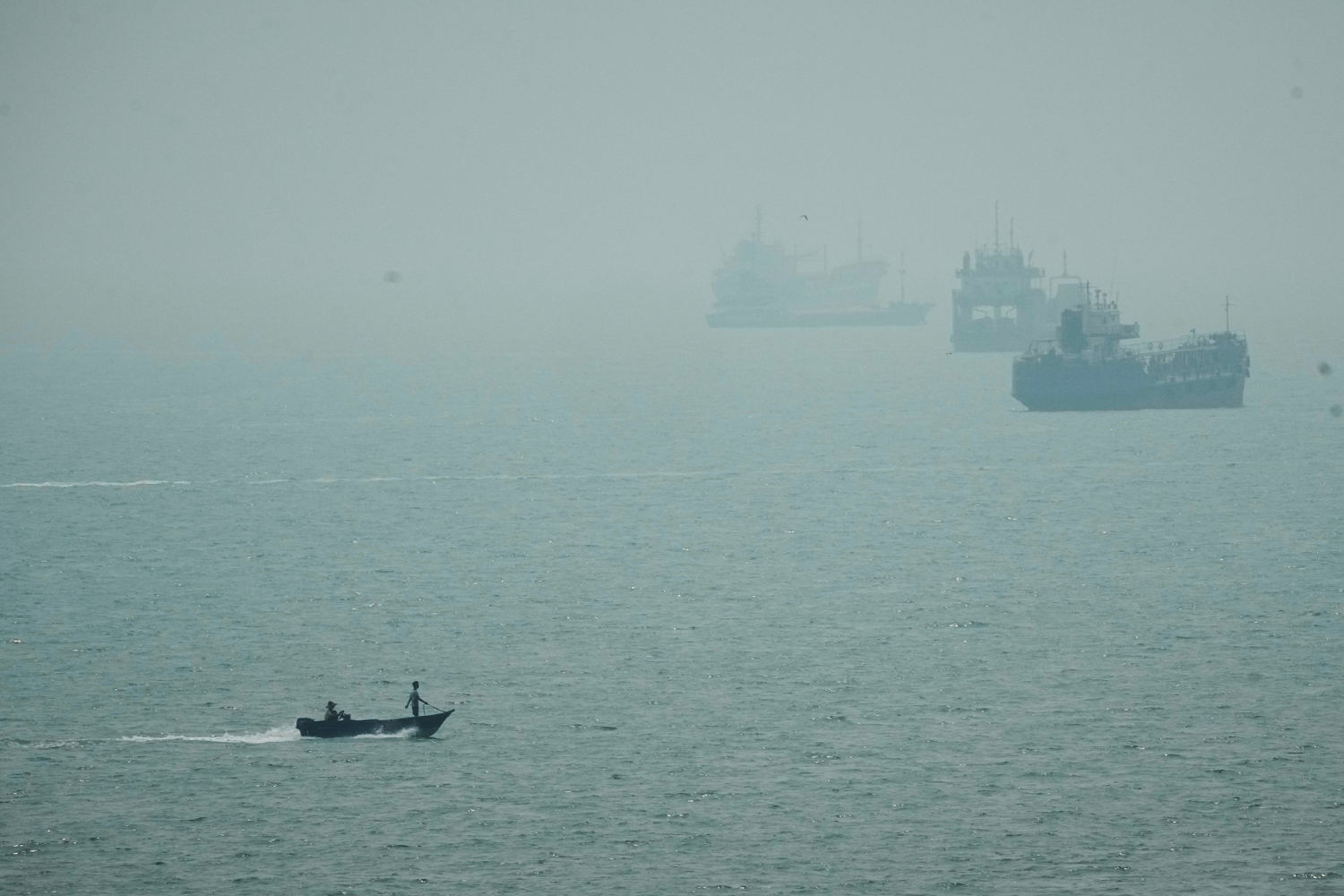
The U.S. military destroyed five Iranian crude oil tankers on Tuesday, responding to recent ballistic missile attacks by Iran’s Islamic Revolutionary Guard Corps (IRGC) targeting a U.S. Navy warship. U.S. Central Command (CENTCOM) stated the warship successfully evaded the attacks, which occurred over two days, and no American personnel were harmed. Four of the tankers were struck in the Gulf of Oman, and one near Kharg Island, Iran’s main oil terminal, after American forces directed crews to abandon ship. This follows a previous U.S. strike on Saturday that destroyed three Iranian tankers in retaliation for earlier attempted attacks on a U.S. aircraft carrier and destroyer.
The specific vessels targeted included the M/T Kaviz, M/T Charminar, M/T Horizon 1, M/T Riesco, and the M/T Derya. CENTCOM also addressed an incident involving an unmanned submersible, stating a U.S. drone that Iran claimed to have captured was “defective” and carried no sensitive data, contradicting Iranian state media reports. Iran has threatened to target oil tankers in Kuwait and Bahrain in response to the U.S. strikes.
The U.S. has also imposed sanctions on elements of Iran’s aviation industry. This exchange of attacks occurs amid a broader context of economic pressure on Iran, including a U.S. blockade limiting oil exports, and disputes over navigation routes through the Strait of Hormuz. Iran seeks to control the route through the strait, which previously was considered an international waterway. Following the strikes, Iranian state media reported missile launches towards U.S. targets in Jordan, raising concerns of further escalation.
Where they differ
- CNBC provided the specific names of the four tankers struck in the Gulf of Oman, a detail not consistently reported across all sources.
- The Washington Examiner and Washington Times emphasized the U.S. directing crews to abandon ship before the strikes, while other outlets mentioned it as part of a broader statement.
- The South China Morning Post highlighted Iran’s retaliatory missile launch towards Jordan, a detail less prominently featured in U.S.-focused reporting.
- NBC News noted that President Trump had previously threatened Iran’s Kharg Island terminal, adding historical context not present in other reports.
What is not yet known
- The extent to which Iran’s missile launches towards Jordan represent a significant escalation of conflict remains unclear.
- The long-term impact of the U.S. strikes on Iran’s oil export capacity and the broader regional economy is not detailed in the sources.
Background
- The U.S. and Iran have engaged in escalating military exchanges, including strikes on oil tankers, since at least September 5, 2026 [Fact Refinery, 2026-09-06].
- Iran claims control of the Strait of Hormuz, a vital oil transit route, while the U.S. asserts it maintains control and directs commercial shipping [Fact Refinery, 2026-09-08].
- The U.S. has imposed a naval blockade of Iranian ports and is actively disabling Iranian vessels, significantly impacting Iran’s economy [Fact Refinery, 2026-09-08].
- Prior to this recent escalation, a U.S. glide bomb likely struck a wedding party in Iran, killing at least five people, and the U.S. was investigating the incident [Fact Refinery, 2026-09-07].
- Negotiations between the U.S. and Iran aimed at a war-ending deal began in June but have continued alongside ongoing hostilities [Fact Refinery, 2026-09-07].
Our reading
Our reading is that the U.S. is demonstrating a clear escalation of force in response to Iranian actions, moving beyond defensive measures to proactively target Iranian assets. The repeated targeting of oil tankers, coupled with the directing of crews to abandon ship before strikes, suggests a deliberate attempt to degrade Iran’s economic capabilities and signal resolve. The conflicting reports regarding the captured drone and the missile launches towards Jordan indicate a growing information war alongside the physical conflict.
What to watch
- Confirmation of the extent of damage to Iran’s oil export capacity, specifically any further reduction in shipping through the Strait of Hormuz [Kpler data, commercial shipping reports].
- Any official statement from Jordan regarding the reported missile launches, and whether they will be interpreted as a direct attack or a further escalation of the conflict [Jordanian government press releases].
- The outcome of the U.S. investigation into the strike on the wedding party, and whether the U.S. will accept responsibility or offer compensation [U.S. Vice President J.D. Vance’s statements, CENTCOM reports].
💬 Comments
📜 Comment Policy