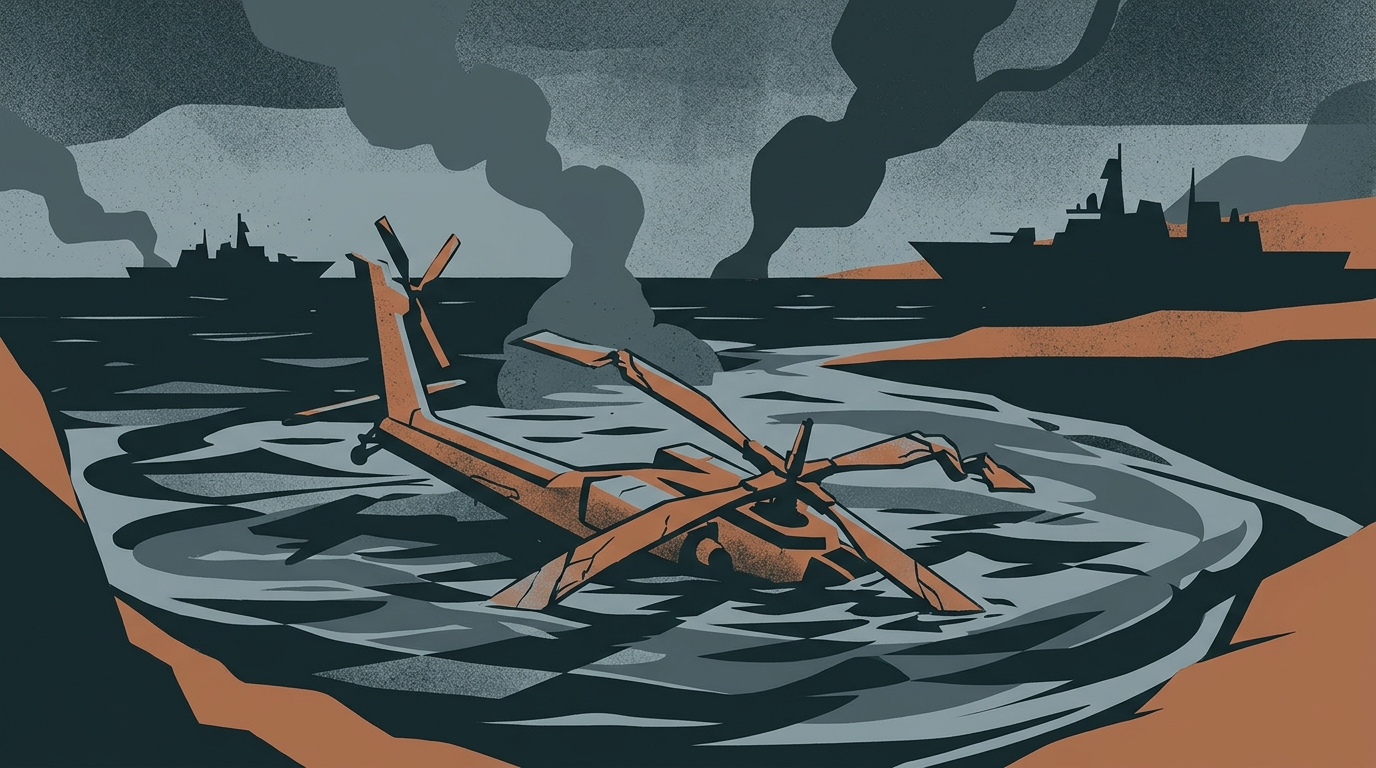
United States military forces executed strikes against Iranian military targets on Tuesday, following a series of events involving the downing of an American helicopter in a critical maritime region. The U.S. Department of Defense and Central Command confirmed the launch of these operations after identifying the cause of the aerial incident. Military officials stated that the response was directed at specific Iranian defense installations in proximity to the area where the aircraft was lost.
Reporting from Breitbart and CENTCOM detailed President Donald Trump’s attribution of responsibility for the helicopter loss to Tehran, stating that Iranian forces were responsible for shooting down a U.S. Army Apache helicopter. The incident occurred near the Strait of Hormuz, a narrow waterway that serves as a vital conduit for global maritime trade and regional military operations. According to CENTCOM reports, the launch of strikes against Iranian military targets followed directly after the president’s assessment of the event. Military planners coordinated the response to address the immediate threat posed by the downing of the aircraft, with officials noting an escalation of tensions in the region following the incident.
Coverage from DW highlighted the United States’ framing of the military response explicitly within the context of self-defense following the shootdown. The outlet reported that American commanders authorized fresh attacks on Iranian positions after confirming the circumstances surrounding the Apache helicopter’s loss. Military authorities maintained that the operations were calibrated to respond proportionally to the incident while maintaining strategic positioning in the region. The announcement underscored the U.S. military’s commitment to defending its assets against hostile actions in international waters and airspace, with defense officials emphasizing that the use of force was a direct reaction to the loss of American equipment and personnel.
The timeline of events began with the downing of the Apache helicopter near the Strait of Hormuz, prompting immediate military assessment. CENTCOM confirmed that U.S. forces launched strikes against Iranian military targets on Tuesday after verifying the cause of the aerial incident. President Donald Trump publicly blamed Tehran for the loss, directing military planners to respond to the hostile action. Defense officials stated that the operations targeted specific Iranian defense installations in the vicinity. The U.S. military’s official statement clarified that the strikes were authorized as a measured response to protect American forces and equipment abroad. Military authorities emphasized that the use of force was necessary to neutralize potential follow-up threats and secure the operational environment around the Strait of Hormuz.
Current military operations are focused on securing the area and ensuring the safety of American personnel. Defense officials have stated that further actions will depend on real-time intelligence regarding Iranian military activity. The situation remains fluid as both sides adjust their strategic postures following the exchange. Military command structures continue to coordinate closely to manage the operational environment and prevent further incidents in the Strait of Hormuz corridor, with regional observers monitoring developments across diplomatic and defense channels.
Read the original coverage
💬 Comments
📜 Comment Policy