US Envoy to Meet Putin as Zelenskyy Confirms Renewed Intelligence Sharing
AI-synthesized · Bias removed · Facts only
2 sources: 2 left · 0 center · 0 right
Facts are sacred. Opinion is labelled.
Image: Bbc Us
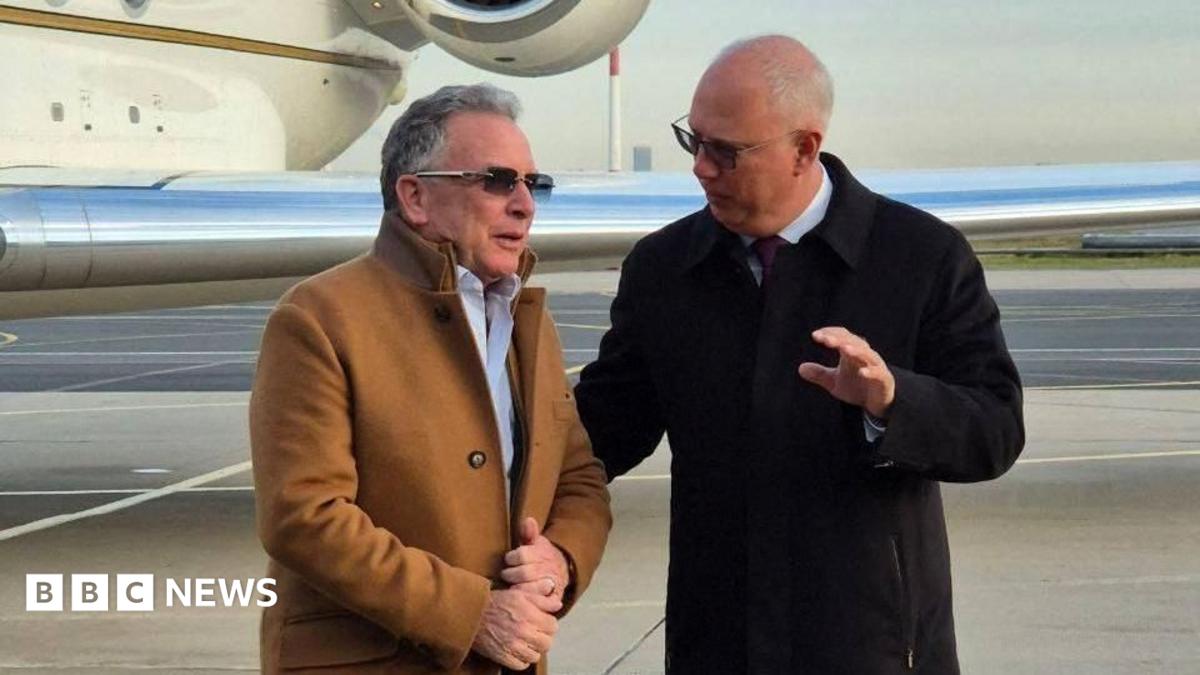
US envoy Steve Witkoff is scheduled to meet Russian President Vladimir Putin in St. Petersburg on Wednesday to discuss proposals for ending the conflict in Ukraine, following what has been described as “constructive” talks in Oslo. The meeting comes after Ukrainian President Volodymyr Zelenskyy stated that intelligence sharing with the US “works now,” addressing previous Kyiv accusations of withheld information. Zelenskyy and European allies are urging Russia to respond to the Oslo proposals, while Jared Kushner, Donald Trump’s son-in-law, participated in the talks via video link.
Finnish President Alexander Stubb reported “genuine progress” on peace proposals, but cautioned patience would be needed. A US official described the talks as “very productive and constructive,” noting a “strong alignment” between the US, Ukraine, and Europe on next steps. Meanwhile, Donald Trump has publicly called for Zelenskyy to “make a deal” and blamed Ukrainian attacks on Russian oil refineries for rising fuel prices.
Zelenskyy has also accused Washington of delaying deliveries of interceptor missiles already paid for by European countries, and insisted Ukraine must be at the negotiating table for any discussions about its future. Despite the Oslo optimism, fighting continues in Ukraine, with at least 12 people killed on Tuesday and Wednesday in attacks across the country. Russian Foreign Minister Sergei Lavrov stated the Kremlin will listen to Witkoff’s proposals but ruled out “any political concessions.”
Where they differ
- Euronews highlighted US Secretary of State Marco Rubio’s description of the Zelenskyy meeting as ‘positive’, a detail not present in the BBC report.
- The BBC detailed Trump’s blame of Ukraine for rising fuel prices and his call for a new Ukrainian president, while Euronews focused more on Trump’s call for Zelenskyy to 'make a deal'.
- Euronews specifically noted Zelenskyy thanking Washington for resuming intelligence sharing, while the BBC reported the same fact without the direct expression of gratitude.
What is not yet known
- The specific details of the Oslo proposals remain undisclosed.
- The extent of Jared Kushner’s involvement in the discussions beyond virtual participation is unclear.
Background
- US special envoy Steve Witkoff is tasked with proposing tripartite talks involving Russia, Ukraine, and former US President Donald Trump to secure a ceasefire in Ukraine [Fact Refinery, 2026-10-20].
- Ukrainian President Volodymyr Zelenskyy has accused the US of delaying military aid, specifically interceptor missiles paid for by European countries, and limiting access to satellite technology [Fact Refinery, 2026-10-20 & 2026-10-15].
- Donald Trump has publicly called for a deal to end the conflict and blamed Ukrainian attacks on Russian oil refineries for rising fuel prices [Fact Refinery, 2026-10-20].
- Russia initiated a full-scale invasion of Ukraine in 2022, leading to ongoing conflict and a suspension of Ukrainian presidential elections [Fact Refinery, 2026-10-12].
Our reading
Our reading is that despite continued fighting, multiple actors are actively pursuing diplomatic avenues to end the conflict in Ukraine. The involvement of both a US envoy and former President Trump suggests a willingness to explore unconventional approaches, while Zelenskyy’s renewed intelligence sharing with the US indicates a potential thaw in relations. However, Lavrov’s statement signals Russia remains unwilling to compromise, hinting at significant obstacles to any negotiated settlement.
What to watch
- The outcome of Steve Witkoff’s meeting with Vladimir Putin on Wednesday, specifically whether Putin acknowledges the Oslo proposals [St. Petersburg, Wednesday].
- Any public statements from Donald Trump regarding the Oslo proposals or his role in potential negotiations [Truth Social/Public Appearances].
- Confirmation of whether European countries are receiving the interceptor missiles they have already paid for, and any changes to US policy regarding satellite technology access [US Department of Defense/European Government Statements].
💬 Comments
📜 Comment Policy