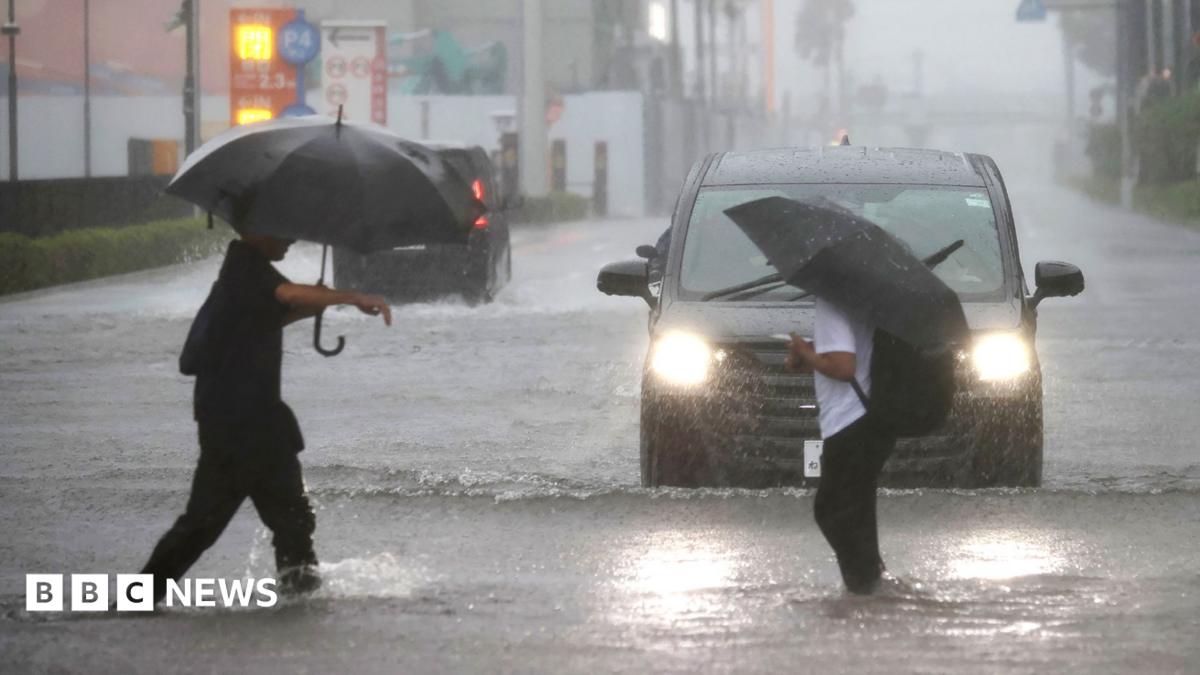
Nearly two million people in Japan are under evacuation orders as Typhoon Dujuan batters the country with strong winds and heavy rain. The Japan Meteorological Agency initially warned of an “imminent threat to life,” but has since downgraded several warnings, though a level four warning remains in place for some areas. Sustained winds of 130km/h (80.8mph) and gusts of 194 km/h have caused power outages for over 50,000 people and led to the cancellation of hundreds of flights and rail services.
Dujuan, the 25th typhoon of the year for Japan, arrived during a five-day holiday, forcing the cancellation of events including concerts at the Rock in Japan music festival and Monday’s program at the Tokyo Game Show. Prime Minister Sanae Takaichi has delayed a planned trip to the United States to monitor the typhoon’s effects, postponing a meeting with US President Donald Trump and a speech at the UN General Assembly.
Emergency services have responded to multiple incidents. The Yokosuka City Fire Department reported a woman in her 60s may have been swept away and buried in a landslide, while the Sodegaura City Fire Department in Chiba prefecture rescued a man in his 50s who fell into a bamboo thicket at a landslide site. Firefighters in Kanagawa prefecture received a report of a house crushed by a landslide. Authorities continue to advise the public to stay informed about weather updates. The storm is occurring amidst a “super El Niño” which has warmed ocean waters and is contributing to the intensity of storms in the Pacific. While climate change is not thought to be increasing the number of typhoons globally, it is likely increasing their intensity, with warmer waters fueling higher wind speeds and heavier rainfall.
Our reading is that Japan is facing a substantial, though currently downgraded, threat from Typhoon Dujuan, necessitating large-scale evacuations and disruption of public life. The postponement of the Prime Minister’s international trip underscores the seriousness with which the government is treating the situation, even after initial warnings were lessened. The confluence of this storm with a “super El Niño” and the acknowledged link between climate change and typhoon intensity suggests a growing pattern of extreme weather events in the Pacific.
Read the original coverage
💬 Comments
📜 Comment Policy