Tusk Defends Constitutional Court Overhaul Amid Protests and Accusations of a Coup
AI-synthesized · Bias removed · Facts only
3 sources: 1 left · 1 center · 1 right
Facts are sacred. Opinion is labelled.
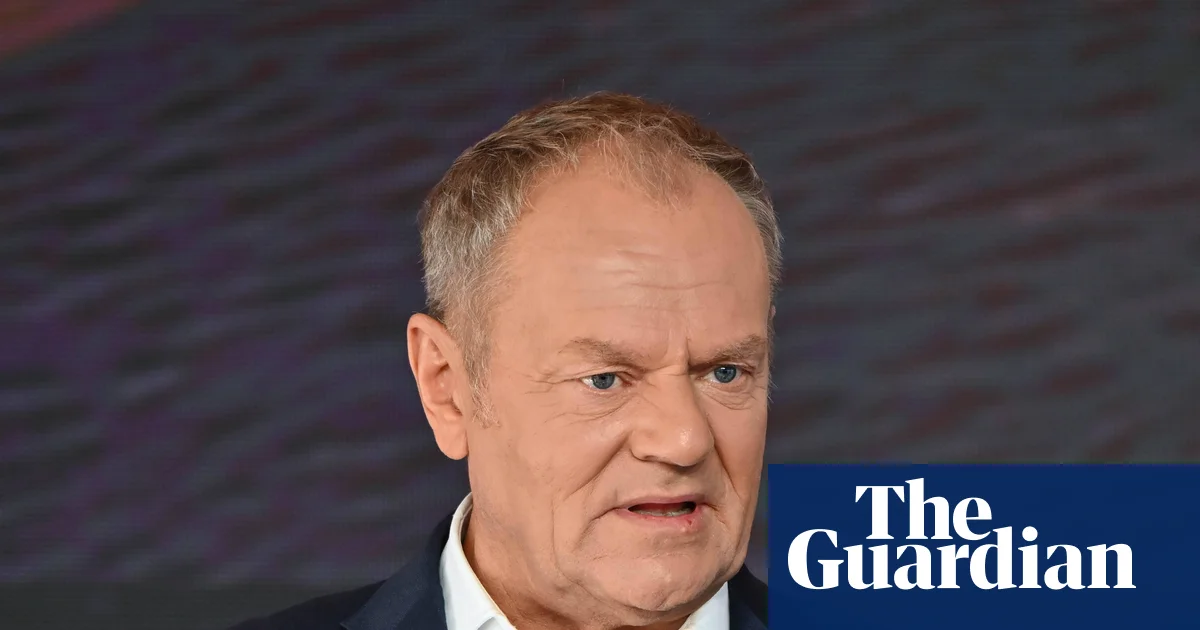
Image: Guardian Us
Poland’s Prime Minister Donald Tusk has defended his government’s move to suspend the president of the Constitutional Tribunal and seize procedural control, despite protests and accusations of a “constitutional coup.” Tusk stated the overhaul is necessary to restore the independence of a court he claims was crippled by years of political interference under the previous Law and Justice (PiS) party. The crisis escalated Friday when government-backed judges attempted to suspend the PiS-appointed chief judge and deputy, prompting street demonstrations and intervention from President Karol Nawrocki, who opposes the changes.
Tusk, in a televised address Saturday, asserted that the previous form of the court “was not a genuine court,” citing adverse rulings from European tribunals. He likened opposition outrage to a thief protesting capture, and accused those opposing the changes of seeking to destroy democracy and the rule of law, even suggesting they receive support from pro-Russian forces. He specifically highlighted that Russia’s former president Dmitry Medvedev had criticized the changes, framing it as further proof of the opposition’s alignment. Tusk also criticized President Nawrocki for attempting to enter the court building to intervene, stating no politician should be able to intimidate judges.
While defending the action, Tusk acknowledged the legal basis for the temporary suspension is “questionable,” according to Poland’s Helsinki Foundation for Human Rights. The foreign minister, Radosław Sikorski, conceded that. Left-leaning outlets emphasize the restoration of the rule of law as the primary justification, while right-leaning coverage focuses on the disruption caused by the suspension and the accusations of a “coup.” The confrontation sets the stage for next year’s parliamentary election, with polls indicating a close race between Tusk’s coalition and the nationalist right.
Where they differ
- Newsmax and the Financial Times focused on the protests and the suspension itself, while the Guardian emphasized Tusk’s broader justification for restoring the rule of law.
- The Guardian highlighted Tusk’s accusations of pro-Russian support for the opposition, a detail less prominent in the Newsmax and Financial Times coverage.
- Right-leaning Newsmax presented the events as a direct response to protests, while the Guardian and Financial Times framed it as a continuation of a longer-running conflict over judicial independence.
What is not yet known
- The long-term impact of the overhaul on the Constitutional Tribunal’s functionality remains unclear.
- The extent to which the accusations of pro-Russian influence will affect public opinion or the upcoming election is unknown.
Background
- Poland’s Prime Minister Donald Tusk warned in September 2026 that Russia is planning hybrid attacks targeting countries supporting Ukraine, potentially using drones or rockets [Fact Refinery, 2026-09-18].
- Polish authorities detained a man suspected of plotting an assassination attempt against Prime Minister Tusk and Defense Minister Wladyslaw Kosiniak-Kamysz in October 2026 [Fact Refinery, 2026-10-11].
- A fire at a Starlink satellite station in Poland was investigated as a deliberate act of sabotage in September 2026, with Deputy Prime Minister Gawkowski linking it to a “new Russian doctrine of attack” [Fact Refinery, 2026-09-24].
- In June 2026, Ukrainian President Zelenskyy returned Poland’s highest honor following its revocation over a historical dispute regarding the naming of a military unit after the Ukrainian Insurgent Army [Fact Refinery, 2026-06-20].
Our reading
Our reading is that Tusk’s government is deliberately escalating a conflict with elements of the previous administration and its supporters, framing opposition as both legally and geopolitically suspect. The invocation of potential Russian influence, while unsubstantiated beyond Medvedev’s criticism, serves to delegitimize dissent and present the overhaul as a matter of national security. We observe a clear attempt to control the narrative, emphasizing the restoration of the rule of law for some outlets while simultaneously accusing opponents of undermining democracy.
What to watch
- The outcome of the parliamentary election next year, and whether Tusk’s coalition maintains power, will indicate the degree to which the public accepts his framing of the situation [polls, election results].
- Any further rulings from European tribunals regarding the independence of the Polish Constitutional Tribunal would either validate or undermine Tusk’s justification for the overhaul [European Court of Justice website].
- Whether Polish authorities present any evidence supporting Tusk’s claims of pro-Russian influence among the opposition, or if these accusations remain rhetorical [official government statements, investigative reports].
💬 Comments
📜 Comment Policy