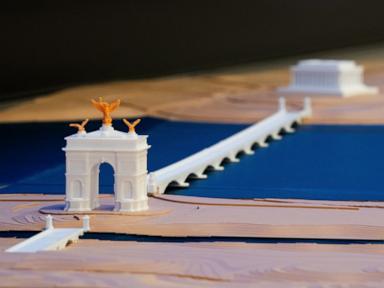
President Donald Trump’s plan to construct a 250-foot triumphal arch in Washington, D.C., has received preliminary approval from the National Capital Planning Commission (NCPC). The proposal, intended to span the Potomac River into Virginia, cleared an initial federal review on Thursday, allowing plans to proceed despite hours of public testimony against the project. However, the NCPC indicated that structural revisions will be necessary to address existing height restrictions in Washington, D.C.
The NCPC’s approval is considered preliminary, with further reviews and modifications anticipated. CBS News reports that the commission offered a solution to meet the city's height limitations for the proposed 250-foot arch. The Hill confirms this initial site approval, noting it allows the plans to move forward. Multiple sources, including ABC News and the Washington Examiner, characterize the approval as an early step in a potentially skyline-altering project.
While the NCPC has given preliminary backing, Newsmax reports that commission members deferred a decision on federal funding for the arch. No right-leaning outlets beyond Newsmax and the Washington Examiner reported on this development; no left-leaning sources addressed the question of funding. The scale of the proposed structure – 250 feet tall – is noteworthy given D.C.’s established height restrictions, suggesting significant engineering challenges will need to be overcome.
The NCPC’s decision comes after a period of public debate surrounding the project. ABC News noted hours of public testimony against the arch's construction. The ultimate fate of Trump’s proposal remains uncertain as it navigates further federal reviews and potential structural adjustments, leaving unresolved whether the design can satisfy both aesthetic ambitions and regulatory constraints.
Read the original coverage
💬 Comments
📜 Comment Policy