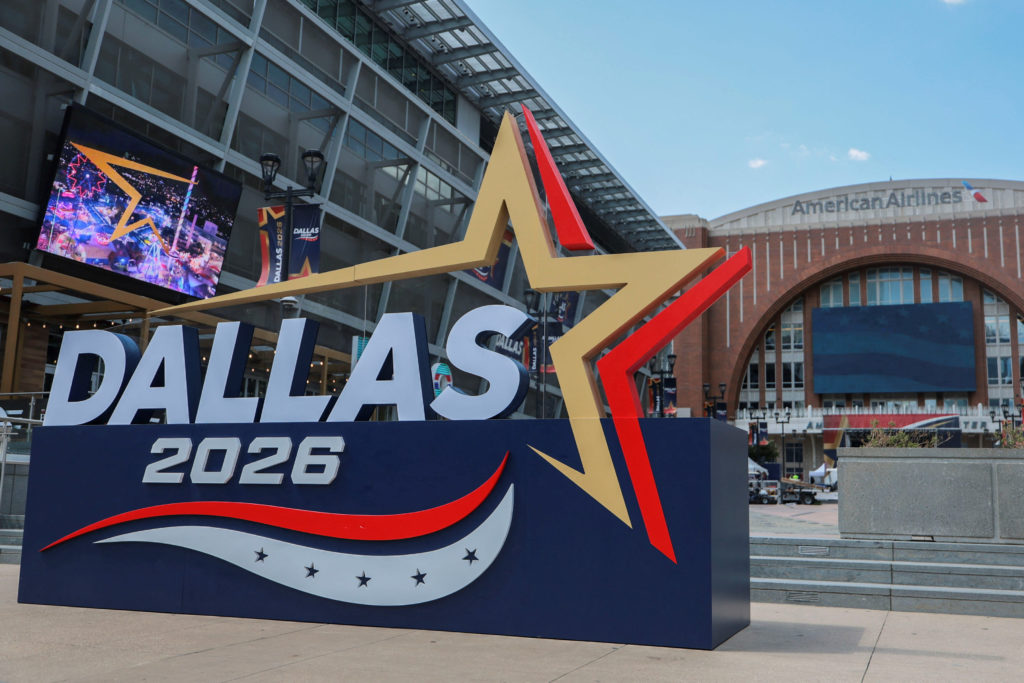
Republicans are holding their first national midterm convention in Dallas this week, featuring keynote addresses from President Donald Trump and Vice President JD Vance. The two-day event, beginning Wednesday, aims to energize voters ahead of the November 3 elections, a traditionally difficult cycle for the party in power. Trump will deliver the opening keynote Wednesday evening and closing remarks Thursday, framing the gathering as a way to boost enthusiasm and turnout.
The convention schedule includes remarks from several GOP lawmakers, including Reps. Brandon Gill, Rob Bresnahan, and Sen. Tim Scott, as well as administration officials like Housing and Urban Development Secretary Scott Turner. Ohio’s Jon Husted, Sen. Dave McCormick, and Attorney General Todd Blanche are also scheduled to speak. However, Secretary of State Marco Rubio and Defense Secretary Pete Hegseth will not be participating, due to a State Department rule prohibiting Senate-confirmed officials from attending partisan conventions.
Sen. Ted Cruz is slated to appear on Thursday alongside Vice President Vance, a scheduling choice noted as potentially setting up a 2028 political subplot. The event is being live-streamed through the RNC’s website and social media accounts, with cable news networks expected to carry portions of the sessions. The RNC is betting that a convention-style spectacle can better motivate midterm voters than standard rallies. Fifty-five days separate the convention from the election that will determine control of Congress.
While no major American political party has previously held a full national convention between elections, the RNC is attempting this format to boost momentum. The convention’s programming runs in one-hour blocks, culminating in Trump’s keynotes. The absence of Rubio and Hegseth from the speaker list is not personal, but due to State Department regulations, according to a spokesperson.
Our reading is the RNC is attempting a novel strategy by holding a midterm convention, signaling a belief that a rally-style event can overcome the historical disadvantage the party in power faces in midterm elections. The focus on Trump as a key speaker suggests the party continues to prioritize appealing to his base, even as potential future leadership dynamics, highlighted by the Cruz/Vance pairing, begin to emerge. The stated reason for certain absences appears to be a straightforward application of existing rules, though the event’s overall purpose is clearly to generate political momentum.
Read the original coverage
💬 Comments
📜 Comment Policy