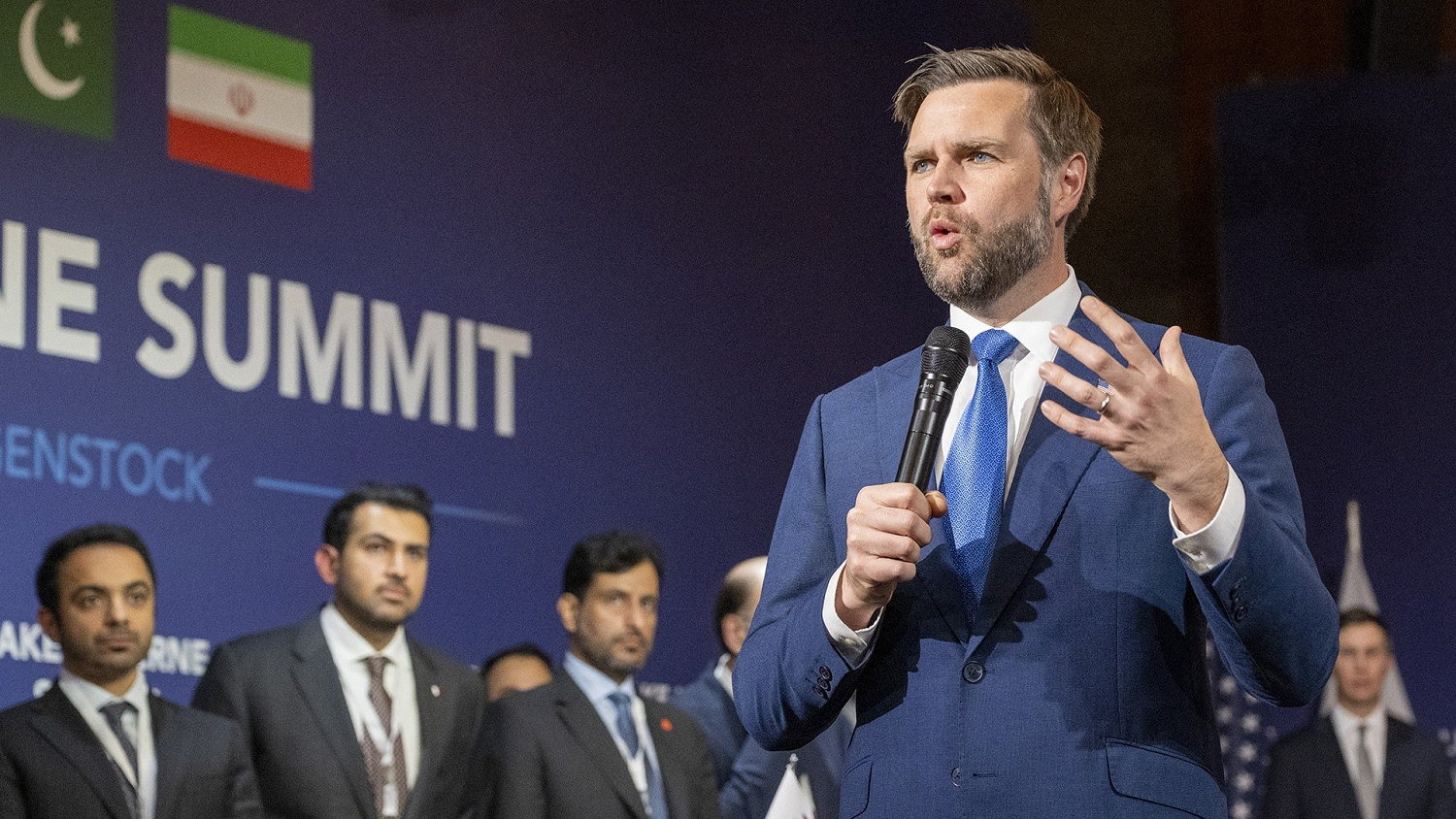
President Donald Trump issued a warning to Iran on Sunday, stating that the United States would resume bombing operations unless Tehran prevented its ally, Hezbollah, from attacking Israel. This statement was made amid heightened tensions in the Middle East following recent Israeli military strikes in Lebanon. Simultaneously, Vice President JD Vance arrived in Lucerne, Switzerland, to engage in diplomatic discussions with officials from Iran, Pakistan, and Qatar regarding nuclear issues and regional stability.
The geopolitical landscape has shifted significantly in recent days. Israel conducted airstrikes on targets within Lebanon, prompting a strong reaction from Iran. In response to these strikes, Iranian officials threatened to close the Strait of Hormuz, a critical waterway for global oil shipments. This threat underscores the escalating risk of broader conflict in the region and has drawn international attention to diplomatic efforts aimed at de-escalation.
Vice President Vance’s presence in Switzerland is part of ongoing efforts to address nuclear concerns and regional security. He met with delegations from Iran, Pakistan, and Qatar in Lucerne. These talks are intended to facilitate dialogue on nuclear proliferation and the broader conflict involving Hezbollah and Israel. The involvement of multiple nations highlights the complex diplomatic web surrounding the crisis, with each country playing a role in either supporting or opposing specific factions in the region.
The timing of President Trump’s threat coincides with Vance’s diplomatic mission. By linking the resumption of bombing to Iran’s control over Hezbollah, the administration has set a clear condition for avoiding further military escalation against Iranian targets. This approach signals a hardline stance from the White House, emphasizing accountability for allied actions while attempting to keep diplomatic channels open through Vice President Vance’s engagements.
Observers note that the situation remains volatile. The threat to close the Strait of Hormuz by Iran adds an economic dimension to the military tensions, potentially impacting global energy markets. Meanwhile, the talks in Switzerland represent a crucial window for dialogue. Officials from Pakistan and Qatar, both key players in regional diplomacy, are participating in these discussions, indicating a multi-lateral interest in preventing further conflict.
The administration’s strategy appears to combine direct military threats with high-level diplomatic engagement. While President Trump’s comments outline the consequences of continued aggression by Hezbollah, Vice President Vance’s meetings aim to find a path toward de-escalation through negotiation. This dual approach reflects the complexity of managing international relations during a period of heightened conflict.
As the talks in Switzerland continue, the international community watches closely for any breakthroughs or further escalations. The outcome of these negotiations could determine whether the region moves toward a diplomatic resolution or faces deeper military confrontation. The interplay between Trump’s threats and Vance’s diplomacy will be critical in shaping the next phase of this geopolitical crisis.
Read the original coverage
💬 Comments
📜 Comment Policy