Trump Suggests Tough Deportation Policies Hurt Republicans in Midterms, Signals Openness to Immigration Deal
AI-synthesized · Bias removed · Facts only
3 sources: 1 left · 2 center · 0 right
Facts are sacred. Opinion is labelled.
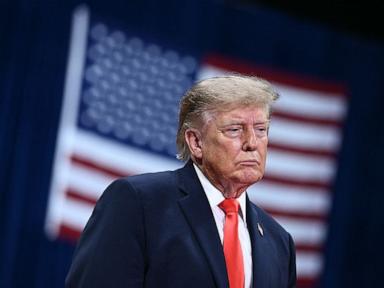
Image: Abc News
President Donald Trump acknowledged that his administration’s deportation policies may have been “too tough” and contributed to Republican losses in the midterm elections. In a “60 Minutes” interview, Trump stated he felt the party was harmed by deporting immigrants with “good jobs,” while still defending his administration’s border security efforts. He indicated a willingness to negotiate with Democrats on immigration reform, suggesting a possible deal could be reached to address the status of long-term residents. The acknowledgment came as Trump elevated Stephen Miller, a key architect of the hardline immigration policies, to the position of Chief of Staff.
Trump stated, “I think it was too tough,” adding, “I think ultimately, that hurt me.” He distinguished between removing “killers” and “drug dealers” and allowing those with established work histories to remain in the country, saying, “Let the people that are here and in some cases here for 10 and 15 years, work a deal for them.” He claimed that “people have already called me” regarding a potential agreement, and asserted he could refrain from insulting Democrats for six months to facilitate negotiations.
While acknowledging the potential negative impact of the policies, Trump also maintained, “I get an A+ for closing up the border.” The Financial Times reported that voters were also turned off by Trump’s approach to Iran, the economy, and “bad messaging.” Shortly after the interview was recorded, Trump appointed Stephen Miller as his new chief of staff, a move criticized by Senate Democratic Leader Chuck Schumer as a “promotion” of the hardline agenda rather than a course correction. The oversight of Immigration and Customs Enforcement and the Department of Homeland Security is a priority for the new Democratic-controlled Congress, and arrests of people with no criminal record and long years in the US rose under Miller's direction, with a goal of 3,000 arrests a day.
Where they differ
- The Indian Express and Financial Times highlighted the broader context of the midterm losses, noting voter dissatisfaction with Trump’s policies on Iran and the economy, while other sources focused primarily on the immigration issue.
- Left-leaning outlets, such as the Indian Express and ABC News, emphasized criticism of Miller’s appointment, framing it as a reinforcement of the hardline policies, while right-leaning outlets like the Washington Times presented it as a continuation of Trump's established agenda.
- Bloomberg and the Straits Times concisely reported Trump’s concession about the deportation policy, while ABC News and the Indian Express provided more detailed quotes and context from the “60 Minutes” interview.
- The Washington Times focused on Trump’s desire for a deal with Democrats, framing it as a proactive step, while other sources presented it as a response to the midterm results.
What is not yet known
- The specific details of the potential immigration deal Trump envisions remain undefined.
- The identity of those who have contacted Trump regarding a potential deal has not been disclosed.
- The extent to which Trump’s appointment of Stephen Miller will impact future immigration policy is uncertain.
Background
- Donald Trump was President at the time of the reported statements and urged voters to view the 2026 midterms as a referendum on his leadership [Fact Refinery, 2026-11-09].
- Democrats secured control of both chambers of Congress in the 2026 midterm elections, prompting Republican introspection [Fact Refinery, 2026-11-09].
- Stephen Miller was appointed Chief of Staff following the midterm losses, a position he held previously as deputy chief of staff for policy and homeland security adviser [Fact Refinery, 2026-11-08].
- Immigration and Customs Enforcement and the Department of Homeland Security oversight became a priority for the new Democratic-controlled Congress, with arrests of people with no criminal record and long years in the US rising under Miller’s direction [Fact Refinery, 2026-11-09].
Our reading
Our reading is that President Trump is attempting to publicly recalibrate his approach following significant midterm losses, acknowledging potential overreach on deportation policies while simultaneously reinforcing continuity by appointing a key architect of those policies to a powerful position. This suggests a desire to appear responsive to voter concerns without fundamentally altering his administration’s direction. The differing reports on the emphasis of the election results, immigration versus broader policy failures, highlight the internal struggle within the Republican party over how to interpret and respond to the outcome.
What to watch
- Whether the details of a potential immigration deal are publicly released, and if so, what concessions Trump is willing to make [undefined source].
- The impact of Stephen Miller’s leadership on future immigration enforcement numbers, specifically regarding arrests of individuals with no criminal record [Immigration and Customs Enforcement data].
- Any shift in tone or policy announcements regarding immigration from the White House in the coming months [White House press briefings/official statements].
💬 Comments
📜 Comment Policy