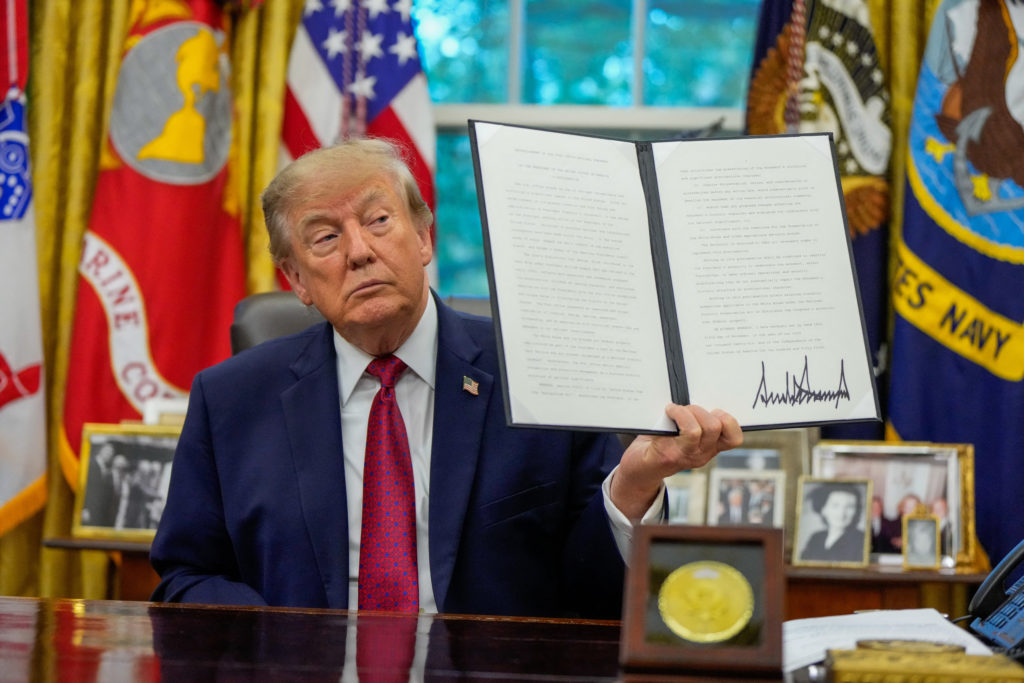
President Trump signed a proclamation Thursday designating the Oval Office and Cabinet Room as a national monument, a move he stated is intended to prevent future modifications to the spaces. Trump noted that Congressional ratification would be required and that any “major modifications” would need Congressional approval.
Since returning to the White House, Trump has overseen design changes to the Oval Office, including the addition of portraits, a copy of the Declaration of Independence, and golden accents. The proclamation aims to preserve the rooms’ current state, though its long-term impact hinges on Congressional action. The Hill reported that Trump specified no “major modifications” would be possible without Congressional approval. NDTV similarly reported Trump signed an order to prevent changes to the Oval Office.
While the proclamation itself is not in dispute, the motivation behind it comes after Trump made significant changes to the Oval Office upon returning to the White House. The move appears to be a preemptive measure to safeguard the rooms’ current design, but the extent to which Congress will support or challenge the proclamation remains to be seen.
Our reading is that President Trump’s proclamation appears to be a defensive maneuver following his own alterations to the Oval Office and Cabinet Room. The stated intention, preventing future changes, seems less about preserving historical accuracy and more about solidifying his own design choices as the standard. The requirement of Congressional approval suggests an anticipation of potential future administrations reversing those choices, and a desire to create a procedural hurdle for them.
Read the original coverage
💬 Comments
📜 Comment Policy