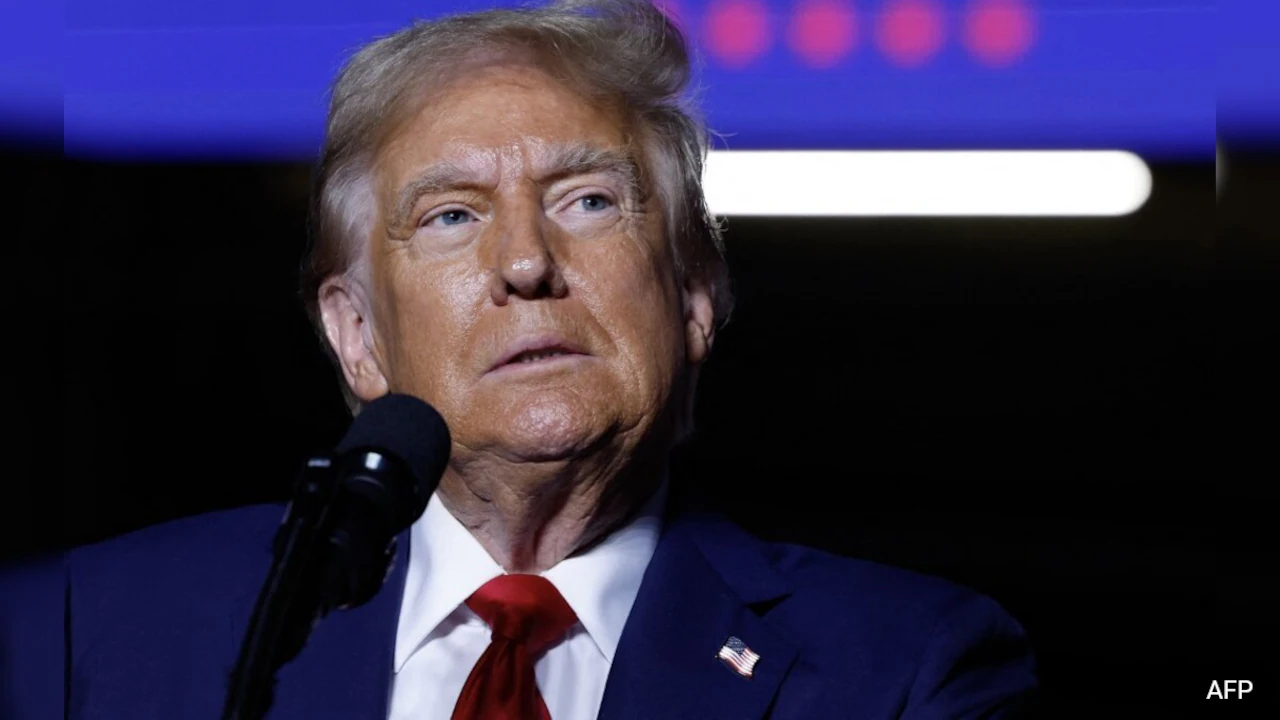
President Donald Trump publicly diverged from the position of Israeli Prime Minister Benjamin Netanyahu on Tuesday, stating that Israel has been engaged in combat with Hezbollah for an excessive period and has caused significant civilian casualties in Lebanon. In this statement, Trump suggested that Syria should take over the responsibility of dealing with the militant group.
The President’s comments marked a sharp departure from the usual diplomatic alignment between the United States and Israel regarding regional security strategies. By declaring that Israel had been "fighting Hezbollah too long," Trump introduced a critique of the duration and conduct of the ongoing conflict. He further noted that the military operations had resulted in the deaths of many civilians within Lebanon, framing these outcomes as reasons for a shift in strategic approach.
In conjunction with his criticism of Israel’s actions, Trump offered praise to Syrian President Ahmed al-Sharaa. This positive assessment of the Syrian leadership stood in contrast to the negative characterization of Israel’s military campaign. The juxtaposition of criticizing an ally’s prolonged engagement while simultaneously commending the leader of a nation often viewed as adversarial highlighted a distinct shift in the administration’s rhetorical posture toward the Middle East.
The remarks indicate a potential recalibration of U.S. expectations for its allies in the region. By suggesting that Syria should "finish off" or handle Hezbollah, Trump implied that Israel was either unable or unwilling to resolve the threat efficiently. This perspective challenges the long-standing U.S. policy of supporting Israel’s right and ability to defend itself against groups designated as terrorist organizations by the American government.
No right-leaning sources reported on this story. The available reporting from left-leaning outlets, such as NDTV, focused on Trump’s praise for Syrian President Ahmed al-Sharaa, framing the comments as a significant diplomatic shift. The Washington Times reported on the divergence with Netanyahu and the specific quotes regarding the duration of the conflict and civilian casualties.
The current status of this diplomatic position remains under observation by international observers. It is unclear whether these comments reflect a formal policy change or merely rhetorical posturing. The reaction from the Israeli government and other regional powers has not been detailed in the provided source material, leaving the immediate geopolitical impact undefined.
Read the original coverage
💬 Comments
📜 Comment Policy