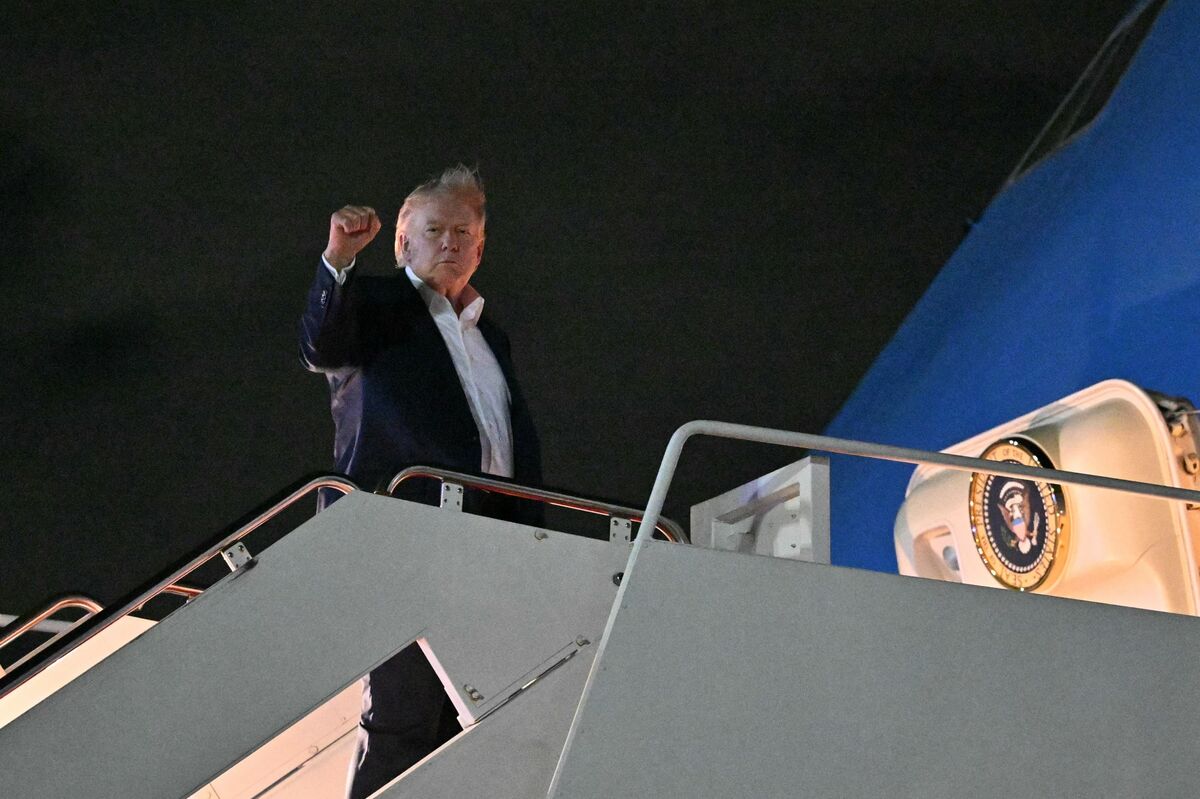
President Donald Trump arrived at the Group of Seven (G7) summit with momentum from recent diplomatic efforts regarding Iran, while simultaneously navigating complex trade tensions with global partners. The President has actively pursued a favorable outcome in negotiations with Tehran, though significant unresolved issues remain as he engages with world leaders on broader geopolitical and economic matters.
According to Bloomberg, which characterizes its reporting as leaning left, questions persist regarding the stability and details of the potential US-Iran agreement. The report notes that while the President has pressed hard for a diplomatic win, many thorny issues have yet to be resolved. This perspective highlights the uncertainty surrounding the deal's finalization and the challenges inherent in the negotiation process.
Conversely, Fox News Politics, identified as far-right, reported that Trump joined the G7 summit with world leaders to discuss a wide array of topics including trade, artificial intelligence, dependency on China, and NATO commitments. The outlet emphasized that these discussions occurred amid tensions related to America First tariffs. This coverage frames the President's agenda around protecting American economic interests and addressing strategic dependencies on foreign nations, particularly China.
The G7 summit serves as a forum for these leaders to address both bilateral and multilateral challenges. On the diplomatic front, the potential US-Iran deal remains a focal point of interest, with observers noting the difficulty in reaching a consensus that satisfies all parties involved. The unresolved nature of these issues suggests that the path to a final agreement is complex and requires further negotiation.
On the economic front, the summit addresses critical trade relationships. The mention of America First tariff tensions indicates ongoing friction between the United States and its allies or trading partners. These tariffs are part of a broader strategy to protect domestic industries and reduce reliance on foreign supply chains, specifically regarding China's growing influence in global markets.
Additionally, the topic of artificial intelligence was included in the discussions, reflecting the growing importance of technology in international relations and economic competition. NATO commitments were also cited as a key area of discussion, highlighting the continued focus on collective defense and security alliances among Western nations.
The juxtaposition of these topics at the summit illustrates the multifaceted nature of current US foreign policy. The President is balancing immediate diplomatic wins with long-term strategic goals regarding trade and national security. While the Iran negotiations represent a specific diplomatic objective, the broader context includes managing global economic dependencies and maintaining strong alliances.
As the summit progresses, leaders are expected to continue debating these issues. The outcome of the US-Iran talks will likely influence future diplomatic strategies, while the resolutions (or lack thereof) regarding trade and tariffs will impact global economic stability. The G7 provides a platform for these discussions, allowing member nations to align their positions or highlight divergences in policy.
Current status indicates that negotiations are ongoing and no final agreements have been publicly confirmed as complete. The President remains engaged in high-level talks, with the expectation that further developments will emerge from the summit. Observers continue to monitor the situation closely, noting the significant stakes involved in both the diplomatic and economic arenas.
Read the original coverage
💬 Comments
📜 Comment Policy